49,000 cars: Canada's new EV cap if U.S. talks stall
Prime Minister Mark Carney stated that Chinese manufacturers could build in Canada if American negotiations fail to secure a unified North American auto market.
By Peter Graham ·
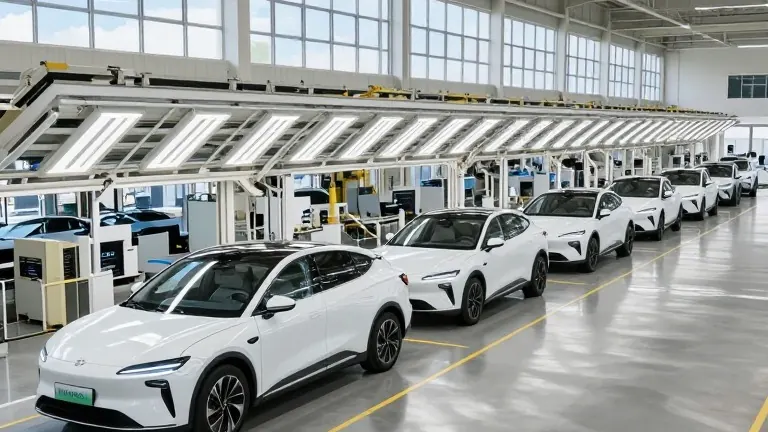
Canadian Prime Minister Mark Carney stated on Monday that Canada might invite Chinese automakers to build vehicles domestically if trade talks with the United States fail to keep the North American auto industry integrated. He made the remarks in Phnom Penh, Cambodia, ahead of a meeting scheduled for this week with Chinese President Xi Jinping in Shenzhen.
Carney told reporters that Canada possesses the best auto workers in the world and wants them fully deployed within a unified market. He noted that recent U.S. trade actions have made that market less integrated. Carney said any future deal with Washington must leave Canada with a viable auto industry. If negotiations do not succeed, Canada will look to European, Chinese, or Japanese manufacturers.
The Prime Minister clarified that Chinese interest is not a bargaining chip against the United States. He described the situation as action and reaction. He said that if Canadian manufacturing assets are not used in a North American context, other opportunities will open up. Carney added that Canada will move forward regardless of the outcome.
Any Chinese investment would require substantial manufacturing within Canada, not just the assembly of imported parts. Carney said the arrangements must include proper labor standards and domestic supply chains. He emphasized the use of Canadian critical minerals in electric vehicles. He stated, “It’s not just about kit cars. There has to be a manufacturing aspect involved.”
The two countries reached an agreement in January that cut the Canadian tariff on Chinese electric vehicles from 100 percent to 6.1 percent. This deal allows up to 49,000 Chinese electric vehicles to enter Canada annually, a number that will increase over time. In return, China lowered tariffs on Canadian agricultural products, including canola.
Ontario Premier Doug Ford criticized the January agreement, warning it could threaten jobs in the province, which serves as the center of Canada’s auto industry. The Detroit Three, including Ford, General Motors, and Stellantis, operate factories across Canada, the United States, and Mexico. Parts often cross borders multiple times before a vehicle is finished. Trump has pushed automakers to move production to the United States.
Canada recently threatened to sue Stellantis after the company moved planned Jeep Compass production from Brampton, Ontario, to Illinois and agreed to sell its idled Canadian plant. Carney said he spoke at length with Trump and senior U.S. officials on Saturday. He reported that the two countries are making progress toward a trade agreement, though differences remain.
More Business · Orlando news · Buyer Beware · Report a business · Got a Story?