Senate GOP opposes Trump order to revert carrier jet launches to steam
Appropriators and Armed Services members cite billions in added costs and delayed schedules as they challenge the president's August memo.
By Daniela Ortega ·
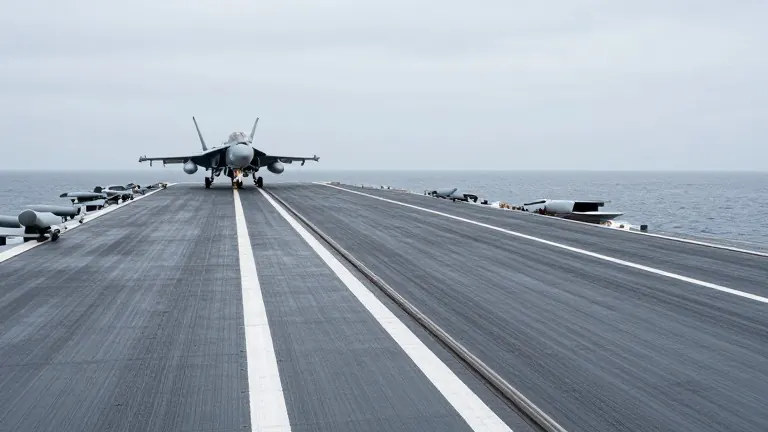
Washington, D.C. Republican senators are moving to counter President Donald Trump’s directive to replace electromagnetic aircraft catapults with steam systems on new naval vessels. The move targets a specific provision in the pending 2027 defense appropriations bill.
The Senate Appropriations Committee released its markup of the defense spending bill on Monday. The bill includes a directive requiring the Navy to submit a report comparing the performance of the magnetic launch system against the older steam technology. Lawmakers on the committee expressed concern that the redesign would incur billions of dollars in additional costs and cause multi-year delays.
In a written statement accompanying the bill, the committee members warned against major programmatic shifts without sufficient analysis or Congressional approval. They noted that recent combat operations in Iran demonstrated the effectiveness of the electromagnetic system aboard the USS Gerald R. Ford. The report indicated that the new system launched more aircraft in less time using fewer crew members than steam catapults.
Senator Roger Wicker, R-Miss., who chairs the Senate Armed Services Committee, addressed the issue directly during a hearing on Tuesday. Wicker stated that returning to steam is a nonstarter and emphasized that this position is widely understood among defense officials.
The hearing focused on the nomination of acting Navy Secretary Hung Cao for the permanent post. Senator Tim Kaine, D-Va., questioned Cao on his support for the president’s August memo. Cao argued that the inclusion of the new electromagnetic launch and elevator systems had delayed the carrier program by seven years. He stated he was attempting to accelerate the schedule by reverting to proven technologies.
Kaine countered that sailors on the USS Ford spoke highly of the new system’s performance. He urged Cao to consider the operational experience before adopting a path that would be more expensive and less capable. Kaine represents Norfolk, the homeport of the Ford, and Newport News, where the only U.S. aircraft carrier builder is located.
The White House defended the administration’s approach. Spokesperson Olivia Wales said the president had revitalized the shipbuilding industry and fixed long-term issues in Navy procurement. She stated the administration would continue to restore American maritime dominance.
The pushback occurs as the Republican-controlled Congress prepares to pass the president’s $1.5 trillion defense budget before the end of the year. Democrats will assume control of both chambers of Congress on January 3. The shift in power is expected to create further contention over defense spending priorities in the coming months.
Cao’s testimony presented a contrast to earlier arguments made during the same hearing. He previously justified halting engineering changes on new frigate designs to keep that program on track. A spokeswoman for Cao, Lieutenant Commander Adagray Willis, said the secretary would work with the White House, Pentagon, and Congress to maintain the Navy’s combat readiness.
The dispute over launch systems has persisted since Trump’s first term. In 2017, he criticized the electromagnetic system for lacking power compared to steam. The August 2026 memo formally directed the Navy to stop iterative design changes on parent designs, citing previous cost growth and cancellations. The administration’s own assessment linked constant design modifications to these financial and schedule issues.
More Politics · Orlando news · Report a business · Got a Story?