Vulcan Launch Fails to Place Amazon Satellites
United Launch Alliance probes an anomaly that occurred ten minutes after liftoff, delaying the first of 38 planned missions for the Amazon Leo constellation.
By Eric Collins ·
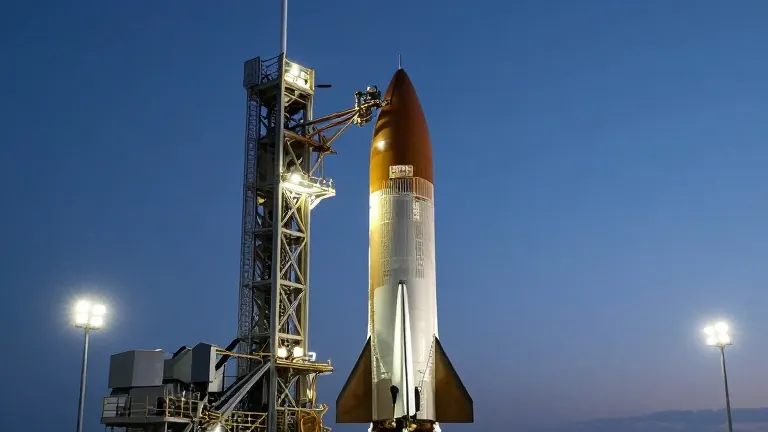
United Launch Alliance is investigating an anomaly that prevented its Vulcan rocket from placing 40 Amazon internet satellites into orbit on Sunday. The failure occurred approximately 10 minutes after the vehicle lifted off from Cape Canaveral Space Force Station. This marks the third anomaly to affect the Vulcan fleet since its operational debut.
The rocket’s side solid rocket boosters were not immediately implicated in the incident. These boosters separate from the vehicle roughly one minute after launch, which is nine minutes before the reported anomaly. ULA stated that it has not yet identified the root cause of the previous issues with the solid rocket boosters, though it implemented corrective measures before this specific flight.
The company released a statement confirming the failure to deliver the payload. “We will work closely with our customer and other appropriate organizations to find the cause, determine the appropriate corrective action, and return to flight as quickly as possible,” the statement read. ULA noted that it does not have specific data to explain the event but is analyzing all available information.
This launch was Vulcan’s first in nearly nine months. The vehicle had been grounded while engineers examined issues with the solid rocket boosters that affected two prior launches. Now that the fleet is back in operation, the failure threatens to ground the rocket again. Former space industry executive Dale Ketcham described the situation as a meaningful loss for the company. “It is a more meaningful loss because of the nature of the investment that ULA has in this vehicle,” Ketcham said.
The Vulcan rocket utilizes BE-4 boosters manufactured by Blue Origin. These engines also power Blue Origin’s New Glenn rocket, which suffered an explosion in May that destroyed a launch pad. Blue Origin attributed that failure to an oxygen valve and is currently applying a fix. Ketcham suggested that if the current anomaly involves the BE-4 engine, it would represent a worst-case scenario for ULA.
The mission was the first of 38 planned launches for Amazon’s Leo constellation. The network is designed to compete with SpaceX’s Starlink service. Currently, fewer than 400 Amazon Leo satellites are in orbit. The company aims to deploy upwards of 5,000 satellites once the system is fully operational. Ketcham noted that the constellation is already behind schedule, making the loss of this launch a significant operational hurdle for Amazon.