FAA's new $875 million AI system expands just days before major ground stop
Officials deny a link between the new technology and the recent travel chaos, but questions about safety and training persist among lawmakers and experts.
By Daniela Ortega ·
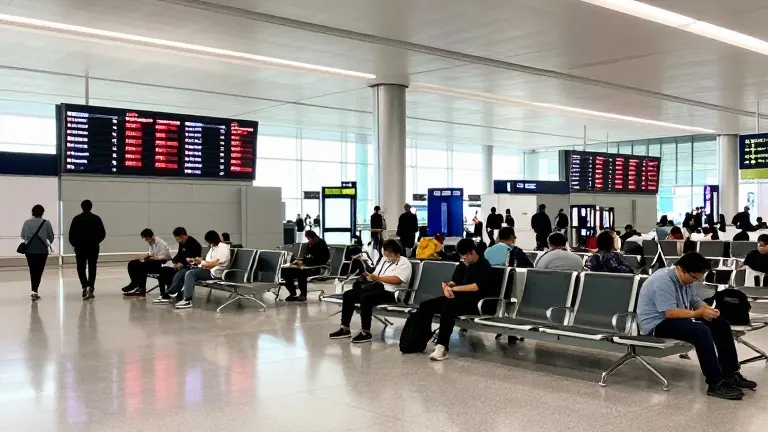
The Federal Aviation Administration is deploying an artificial intelligence system that costs $875 million. This new tool, known as SMART, went live across all 22 air traffic control centers in the United States on Nov. 10. That expansion happened three days before a major ground stop disrupted airline travel across the country. The timing has raised questions about the new technology.
Government officials state that the ground stop was not caused by SMART. Homeland Security Secretary Markwayne Mullin said Friday there is no indication the communications issues are linked to the new computer system. Top officials at the Transportation Department and the FAA repeated that assessment on Saturday. Air Space Intelligence, the startup that designed the software, also confirmed the ground stop was not caused by their product or its integration with the FAA.
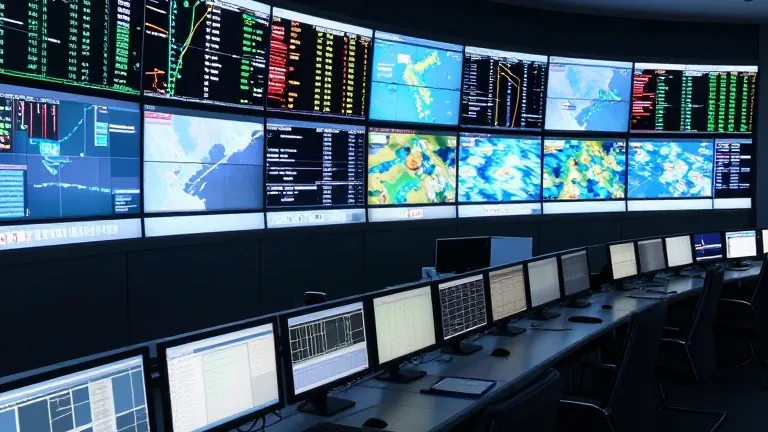
SMART stands for Strategic Management of Airspace, Routes and Trajectories. The system is based in a single location near Washington. There, a team of experts analyzes flight schedules, weather forecasts, and hundreds of other data streams. The office sends recommendations to the FAA command center, which then relays them to air traffic controllers for consideration. Transportation Secretary Sean Duffy and FAA Administrator Bryan Bedford unveiled the system in September. They described it as a tool that centralizes 200 data streams, including weather patterns, flight paths, and controller staffing metrics.
The AI engine creates a visualization of where planes are heading and where congestion or weather could cause problems. The goal is for specialists to use this platform to fix issues before they arise. The FAA reported that during an initial test in the Washington area this fall, the system helped reroute 180 flights. Those flights saved an average of 10 minutes and 80 gallons of fuel each by diverting around weather. One specific flight from Tampa to Dallas cut 42 minutes off its trip thanks to the system's recommendations.
The system also aims to improve how the FAA handles weather. Currently, the agency blocks off portions of airspace affected by weather in large, rectangular boxes. These boxes do not reflect the irregular shape of storms, which often have narrow gaps that aircraft can safely fly through. SMART provides a clearer picture of how weather will affect air traffic over time. This allows controllers to plan around storms and use available airspace instead of shutting down large areas unnecessarily.
Lawmakers and outside groups have raised concerns about the system before the recent ground stop. In October, House Democrats sent a letter to the U.S. Government Accountability Office requesting an audit of the software. The letter noted that the nation's front-line aviation safety workforce had little to no input into SMART's development. It also stated that controllers have received limited training and information during the deployment process. The letter warned that AI could interfere with decision-making or hallucinate safety-critical information.
Experts say no other country has a working AI air traffic tool like SMART. Eurocontrol, the European air traffic authority, is testing a similar system, and several manufacturers are prototyping their own. Michael McCormick, an associate professor at Embry-Riddle Aeronautical University, confirmed that SMART is unique in its current operational status. While the system is designed to assist humans rather than replace them, concerns remain about relying on AI when human lives are at stake.
Mike O'Donnell, a former top FAA official, said the agency must ensure the system is just a tool in the toolbox. He noted that the FAA cannot afford to be wrong on this. O'Donnell emphasized the need for guardrails and backstops to verify that the AI is not giving wrong information to controllers. Phillip Buckendorf, CEO of Air Space Intelligence, told NPR that the AI does the math and computation, but the human operator makes the final decision. The system is designed for traffic managers who oversee the entire U.S. airspace.