Hackers spoofed emergency apps in Ukraine and Russia Sunday
Cyberattack sent false radiation and chemical alerts to users, prompting temporary suspension of services in both countries.
By Peter Graham ·
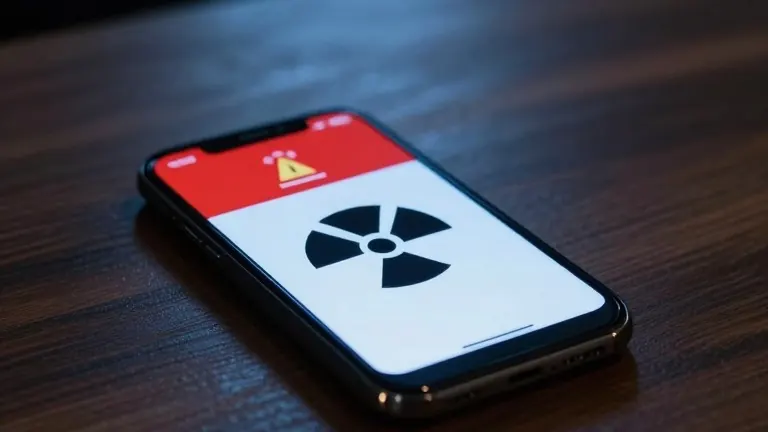
Cyberattackers targeted the official emergency alert mobile applications in both Ukraine and Russia late Sunday, sending false warnings to users in the two nations.
In Ukraine, the air raid alert channel reported that unauthorized parties interfered with the app, causing it to display fake alerts about high radiation levels, chemical threats, and public disturbances in Kyiv. The messages were written in English with spelling errors, as well as in a mix of Russian and Ukrainian. Ukraine’s state-run Center for Countering Disinformation confirmed the breach and advised users to monitor social media channels and rely on physical sirens while the issue was addressed. The app was restored overnight. Yurii Ihnat, a spokesman for Ukraine’s air force command, stated that the cyberattack did not impact military operations because the app is separate from defense systems. He noted that the air force continues to report threats through independent channels, including social media. The Russian Telegram channel Mash reported speaking with representatives of the hacking group Hitcore, who claimed responsibility for the attack. That claim has not been independently verified.
In Russia, officials said Monday that hackers accessed the Russian Emergency Ministry's mobile app to send fake emergency alerts. The ministry did not identify the attackers but stated that the wider public alert system remained functional. The mobile app serves as a supplement to SMS messages, media broadcasts, and municipal sirens. Kremlin spokesperson Dmitry Peskov said that all state agencies face constant cyber threats, including those using artificial intelligence. He emphasized that government bodies must improve the cybersecurity of their digital resources.
Hours after a humanitarian ceasefire expired in the Kherson region, Ukrainian authorities reported multiple Russian drone attacks early Monday. The regional administration said a 62-year-old woman and a 73-year-old man were hospitalized with blast injuries in Kherson. The localized ceasefire, which began on Oct. 27, ended at midnight at the start of Monday. The pause was tied to a humanitarian aid mission in the Russian-occupied city of Oleshky. The White House said U.S. first lady Melania Trump helped broker the truce. An estimated 2,000 civilians were in Oleshky when the truce took effect. They could evacuate to territory controlled by either Ukraine or Russia, or remain in the city with replenished supplies. Exact evacuation totals were withheld to protect those who stayed.
Ukraine’s general staff said Monday that Russia’s military had bolstered drone defenses and replenished ammunition in the area during the ceasefire. Emergency services in the eastern Kharkiv region reported that drone strikes injured 12 people and damaged a refrigeration facility, greenhouses, and residential buildings. Five people were also injured in the Black Sea port city of Odesa, where a warehouse was targeted. Russia’s Ministry of Defense said it had shot down 212 Ukrainian drones overnight. Gov. Vyacheslav Fedorishchev of Russia’s Samara region said local air defenses were repelling an aerial attack. Independent Russian media outlets later reported that Ukrainian drones targeted one of Europe’s largest oil transport hubs in the Samara region.
The next scheduled phase of the humanitarian operation in Oleshky is not yet determined, as negotiators review the evacuation data and the condition of the remaining residents.
Source: WKMG-TV · original report published