NTSB takes over Learjet crash that killed 9 in Florida
Investigators found tail pieces more than a mile from the crater and are searching for the cockpit voice recorder.
By Eric Collins ·
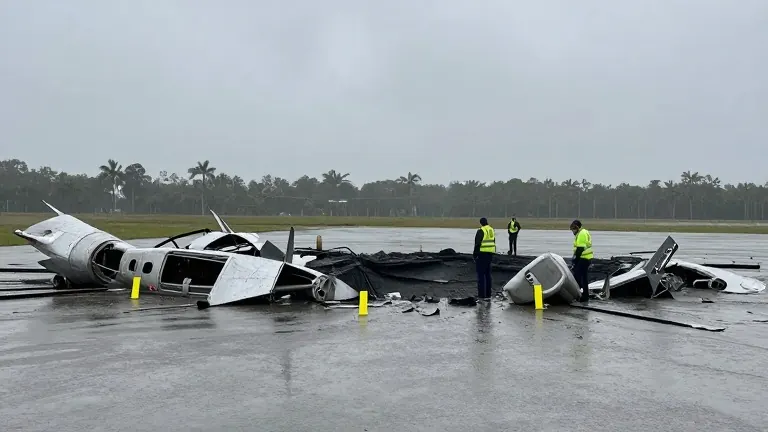
Federal investigators have started work on the Learjet crash that killed all nine people aboard, and they say an answer to what happened is at least a year away. The National Transportation Safety Board is leading the inquiry after the jet hit the ground with enough force to carve a crater and break the plane apart. The crash came after the aircraft flew into a thunderstorm.
The NTSB team will spend days gathering wreckage. On Tuesday, investigators said they found pieces of the elevator, the tail part that controls the angle of the nose, more than a mile from the main crater. That distance tells them the plane began breaking apart before it struck the ground. Heavy rain across Florida this week has filled the crater with water and left some pieces submerged, and a utility pole had been moved out of the way. The NTSB asked anyone who finds a piece of the plane to report it.
NTSB member Tom Chapman said the search is on for the cockpit voice recorder, which could reveal what the pilots said as they lost control after turbulence and ice built up on the wings. "That will be very important data," Chapman said. If it cannot be found, he said, the team can still work without it: "We're still able to do some incredible detective work and determine how things transpired." The co-pilot told air traffic controllers the plane was being thrown up and down more than 700 feet as she asked for a better route. Investigators are trying to learn why the pilots did not fly around the storms.
A preliminary report is expected in about a month. Wreckage will go to a secure hangar, where technicians can test components and put parts back together. Fire and impact destroyed much of the aircraft. Investigators will also pull maintenance records, interview staff at the operator, Upper Jets, along with air traffic controllers and workers at the Texas airport where the flight departed, and collect bystander videos, photos and any surveillance footage.
Weather is an early focus. The jet was cruising at 35,000 feet after leaving 41,000 feet, and maps that lay the flight path over weather radar show it flying into a small red storm cell that worsened quickly. Retired airline pilot John Cox said he does not understand why the crew came down from 41,000 feet. "I don't understand why they came down," Cox said. The NTSB will work with the National Weather Service and the Federal Aviation Administration to pin down what the plane met in the air.
The agency's roughly 400 workers are handling more than 1,200 active investigations, and a full report on this crash could take 12 to 18 months or longer. The final document will lay out the facts and name a probable cause, then offer recommendations. The NTSB cannot force anyone to act on them; the FAA, Congress and the industry decide whether to adopt them.
Source: WKMG-TV · original report published