SpaceX Booster Falls Into Gulf, Starship Aims for Saturday Return
The first-stage rocket missed its pad landing Friday, but the upper stage is expected to attempt a midair catch at Starbase.
By Peter Graham ·
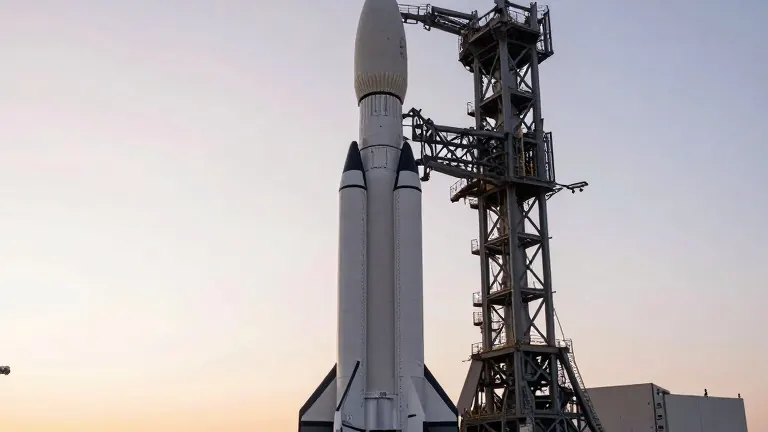
Boca Chica, Texas. SpaceX’s Starship booster crashed into the Gulf of Mexico on Friday morning. The first-stage rocket exploded after failing to return to the launch pad. Despite the loss, the upper stage spacecraft continued its mission. It is currently in orbit and scheduled to attempt a return to the pad on Saturday.
The company planned to catch both rocket stages in the air using mechanical arms on the launch tower. This would have been the first time any spacecraft was recovered from orbit in two pieces. The booster was diverted to an offshore point after liftoff. SpaceX had successfully caught boosters three times in previous tests. The company did not provide a reason for the failure.
SpaceX launch commentator Kate Tice noted the disappointment in a broadcast. “Well, that certainly isn’t the news that we had hoped to hear for today,” Tice said. She added that the decision to divert was part of rigorous safety checks to protect the pad. The spacecraft is now completing laps around the Earth. It will travel at an altitude of approximately 170 miles. The flight could last up to 22 hours.
Shortly after reaching orbit, the Starship released 26 Starlink satellites. These are some of the company’s most advanced communication devices. The spacecraft is expected to complete 15 orbits before re-entering the atmosphere. The goal is to land the 171-foot upper stage at Starbase near the U.S.-Mexico border. The booster it lost was 236 feet tall. Together, the two stages form a rocket that stands 407 feet high.
This was the first test of the upgraded booster model designed for Moon and Mars missions. Previous Starship flights ended with the spacecraft in the ocean. The first full-scale test in 2023 ended with a self-destruct sequence after engine failures. The last test in September reached orbit but did not attempt recovery. SpaceX aims to make the rocket fully reusable to increase launch frequency.
Kiko Dontchev, vice president of launch at SpaceX, spoke at a NASA tech summit last week at Kennedy Space Center. He said reusability is necessary to scale from zero launches to 100,000. “Falcon rockets are still not fully reusable. We still throw that second stage away every single flight. Starship, we’re going to catch both the first stage and second stage,” Dontchev said. SpaceX plans to launch Starships from Florida within months and from Louisiana in a few years.
NASA is paying SpaceX to land Artemis astronauts on the Moon. The agency will decide whether to use Starship or Blue Origin’s Blue Moon for the Artemis IV landing. That mission is the first crewed Moon landing in over 50 years. NASA Administrator Jared Isaacman posted on X after Starship reached orbit. “We are looking forward to some of that on-orbit Starlink capability on Artemis III,” Isaacman said. Astronauts will practice docking with both vehicles during the Artemis III mission next summer.
SpaceX’s smaller Falcon rockets will continue to operate from Cape Canaveral. They carry astronauts to the International Space Station and deploy satellites. Musk intends for Starship to eventually replace the Falcon fleet. The Saturday landing attempt will be the first time SpaceX tries to capture the spacecraft portion of the rocket.