Translator J. Martin Holman on the Lost Work of Yasushi Inoue
Holman explains why one of Japan's most decorated authors remains under-read in English and how his childhood stories reveal a deep focus on overlooked lives.
By Peter Graham ·
Yasushi Inoue published fifty novels and one hundred and fifty short stories during his career, yet only a fraction of that body of work has been translated into English. J. Martin Holman, who translated the collection “The Death of a Certain Woman,” attributes this gap to a combination of historical focus and market size. Inoue was awarded Japan’s highest artistic honor, the Order of Culture, in 1976, and was reportedly nominated for a Nobel Prize, but Western readers have had limited access to his writing. Holman notes that Inoue’s historical novels often assume background knowledge that foreign audiences may lack. He also points to the small market for Japanese literature during Inoue’s prime and the scarcity of capable translators as factors that kept his work from reaching a wider English-speaking readership.
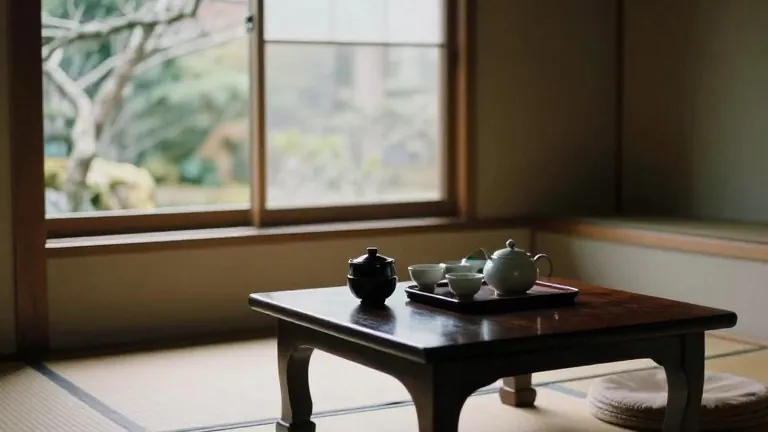
Holman first connected with Inoue in 1988 to discuss translating “The Memoirs of the Priest Honkaku,” a historical novel featuring the sixteenth-century tea master Sen no Rikyū. The novel is written from the perspective of a man who served Rikyū twenty years before the master’s death. Inoue hosted a tea ceremony at his home in Setagaya, Tokyo, to celebrate the start of that project. At the time, Holman was also reading Inoue’s short fiction about childhood and youth, some of which was autobiographical. He became so engaged with these stories that he set the historical novel aside. In subsequent meetings, he discussed the childhood stories with Inoue, who gave him permission to translate them.
Holman began with the story “The Naked Treetops,” which he published in 1991, the month Inoue died. Over the following years, he translated other short stories and the novel “Asunaro Monogatari,” which translates to “The Story of the Tomorrow Tree.” Inoue described that book as autobiographical in the sense that it depicted the life he might have lived if certain events had unfolded differently. The stories in “The Death of a Certain Woman” originally appeared in various Japanese collections during the 1950s and 1960s. Holman assembled them into a single volume for this English edition.
Holman is drawn to the characters in Inoue’s work who might otherwise have been forgotten. He describes Inoue’s literature as focusing on the smallest and most tender human actions, which are often ignored. Inoue’s novels often center on people on the periphery of great historical figures, such as Confucius or Japanese emperors. Holman argues that readers might initially be misled into thinking these towering figures are the center of the story, but the focus is actually on the lives and experiences of those around them. Inoue’s writing demonstrates a consistent care for the beings he depicts, whether in historical works or semi-autobiographical stories.
The collection “The Death of a Certain Woman” examines the experiences of a child and takes place in the early twentieth century. For Inoue, who was born in 1907, the 1910s and 1920s were his formative years. He was largely raised by a woman he considered his grandmother, though she was actually his late grandfather’s former mistress. Japanese law required his family to support her, which they did, though grudgingly. Inoue’s stories follow an adolescent protagonist as various men and women enter his life, causing profound changes in his thoughts and understanding. Some of these changes involve language. Holman notes that his own sense of language has changed over the decades since he began translating Inoue, mirroring a change in his understanding of human existence.
The title story is framed as a middle-aged man’s account of a mysterious incident from his youth involving a woman who moved to his rural village when he was a boy. At the end of the story, the narrator feels as though he finally understands what happened to her. When asked if Inoue intended this revelation to be conclusive, Holman says Inoue never discussed interpretations of his own literature. Inoue told Holman that interpretation is the job of the reader or the translator. He added that if he had more to say about a subject, he would write another story. Holman finds it difficult to imagine an end to the transformation of his own understanding in this life.