
Doctors Turn to AI Scribes for Notes
Physicians report that artificial intelligence tools save time but raise new questions about privacy and accuracy in medical records.
By Daniela Ortega ·
Family physicians across the region are increasingly using artificial intelligence software to document patient visits. Dr. Mara Gordon, a family physician in Camden, New Jersey, uses the technology in her practice. She states that the tools allow her to focus more fully on her patients rather than typing notes on a computer screen.
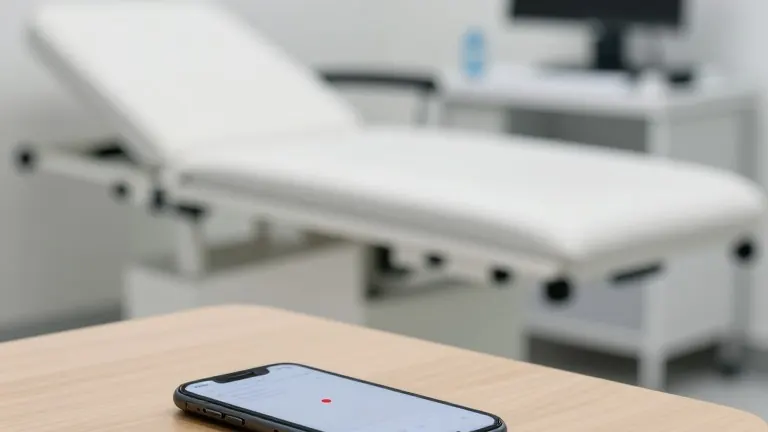
The process begins when a doctor asks a patient for permission to use the software. If the patient agrees, the doctor records the conversation using a smartphone app. The device is typically placed on the desk in the exam room. The software uses automatic speech recognition to distinguish between the voices of the doctor and the patient. In some cases, the app must differentiate between three or more voices if family members are present.
After the visit ends, the recording is transcribed. A large language model then converts the raw transcript into a medical note. These notes follow a standard format specific to the medical specialty and the type of visit. The resulting document includes what the patient reported, physical exam findings, and the doctor's medical decision-making.
Many physicians use personal smartphones for this purpose. Gordon notes that she has occasionally received notification pings from personal group chats while recording a visit. She now keeps her phone in do not disturb mode during patient care to avoid such interruptions.
Privacy protocols are designed to protect patient data. Conversations are not stored on the doctor's personal device. Instead, they are uploaded directly to a cloud system that complies with the Health Insurance Portability and Accountability Act, or HIPAA. This federal law sets standards for protecting patient privacy. Software companies are responsible for safeguarding the data at every step. They encrypt the data and control access to it. Most systems delete the recording and the note after a set period of time.
Errors can occur in the generated notes. Gordon describes a recent case involving a patient with metastatic cancer who did not believe he had the disease. The AI scribe recorded the situation as a misdiagnosis rather than reflecting the nuance of the conversation. Other common errors include mistaking a patient's gender or age. The software is also known to confuse affirmative statements with negative ones. For example, it may record that a patient does have chest pain when the patient actually said they do not have chest pain.
Dr. Eileen Kim, an assistant professor of internal medicine at the University of California San Diego, warns about the accumulation of errors. She notes that overburdened doctors may not have time to adequately review AI-generated notes before adding them to the chart. Kim states, You have a doctor who is overburdened, seeing way too many patients. They have this AI tool that is offered to them that seems like a great solution, but they do not have time to adequately review everything. It goes into the chart. Then you have another AI tool that is reading through all these notes. But they are wrong. And then it just propagates errors throughout the chart.
Doctors remain liable for the content of the notes they sign. Most AI scribe software requires physicians to sign a user agreement stating they are responsible for everything written in the medical record, even if an AI tool assisted in its creation. Gordon says she edits the notes to clarify her clinical decision-making before signing off on them.
Health equity advocates express concern that many AI scribes only work with English-speaking patients. This limitation could widen health disparities. Some patients may feel more comfortable disclosing sensitive information if the doctor is looking at them instead of a screen. Conversely, other patients may hesitate to share details if they fear an AI company is listening to their conversation.
Patients can opt out of the scribing process if they prefer. In those cases, the doctor takes notes on the computer as they have for years. However, Kim says it is difficult for patients to opt out of AI in medicine entirely. She notes that AI is used for billing, clinical decision-making, and risk calculators. Kim adds, It is just everywhere. It would be impossible to separate. We use it throughout the healthcare system.
More Business · Orlando news · Buyer Beware · Report a business · Got a Story?