Eisenkot Named to Form Israel's Next Government After Knesset Election
The former army chief has 28 days to build a coalition in a fragmented Knesset where no single bloc holds a majority.
By Victoria Hayes ·
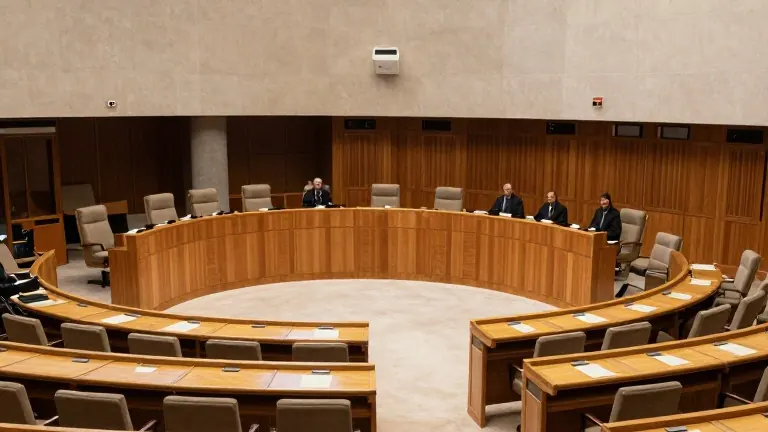
Gadi Eisenkot has been designated to form the next Israeli government, a decision that shifts power away from Prime Minister Benjamin Netanyahu following the Oct. 27 parliamentary elections. President Isaac Herzog announced the choice late Saturday after consulting with parties elected to the 120-member Knesset.
The election left no clear winner. Netanyahu’s coalition dropped from a peak of 68 seats to 53. Eisenkot’s opposition bloc won 48 seats, while Arab-led parties secured the remaining 19. Herzog determined that Eisenkot has the best chance of assembling the 61 seats required for a majority.
Eisenkot will officially receive the mandate during a ceremony on Sunday. He has 28 days to form a coalition, with the possibility of a two-week extension granted by the president. If he fails, Netanyahu may be given a second attempt. If Netanyahu also fails, Israel will return to the polls early next spring.
New members of the Knesset are sworn in on Tuesday evening. Until a new government takes office, Netanyahu and his cabinet will serve in a caretaker role with limited powers.
Eisenkot faces three primary paths to power: a power-sharing agreement with Netanyahu, support from Arab-led parties, or a deal with ultra-Orthodox religious parties. Each option presents distinct political hurdles for the former army chief.
The former army chief and his partners campaigned on the issue of equal military service, seeking to end the long-standing draft exemptions for the ultra-Orthodox. That group demands exemptions to preserve their religious lifestyle. The ultra-Orthodox party United Torah Judaism has signaled openness to cooperation, positioning itself as a potential swing vote.
Support from Arab-led parties offers a viable majority but creates friction within Eisenkot’s coalition. The Joint List, one of two Arab-led parties, will support Eisenkot from outside the government. Ra’am, the other party, said it will join the coalition. Only one Arab party has ever governed, joining a coalition in 2021.
The conservative Yisrael Beytenu party, an Eisenkot ally, has stated it will not join a government with Arab-led parties. Eisenkot has set conditions for any Arab party that joins, including recognition of Israel as a Jewish state and declaring Hamas a terrorist organization.
Netanyahu, who lost his majority, has claimed the election was stolen by Arab voters who turned out in large numbers. He offered limited evidence for these claims. The Shin Bet security agency has opened an investigation into possible foreign interference. The Central Elections Commission and President Herzog both declared the vote valid.
Netanyahu called for a national unity government on Saturday night. Eisenkot vowed to form a government as quickly as possible, acknowledging that compromises will be necessary to navigate the fragmented assembly.
More World · Orlando news · Report a business · Got a Story?