Israelis Cast Votes in Tight Race Over Security and Leadership
More than 7.3 million Israelis voted Tuesday in a closely contested election that centers on the government's response to the October 7 attack and the wars that followed.
By Eric Collins ·
Prime Minister Benjamin Netanyahu faces voters Tuesday in a national election that will determine his future after nearly 20 years in power. The race is expected to be close, with polls showing no clear winner. The outcome will depend on coalition talks among roughly a dozen political parties.
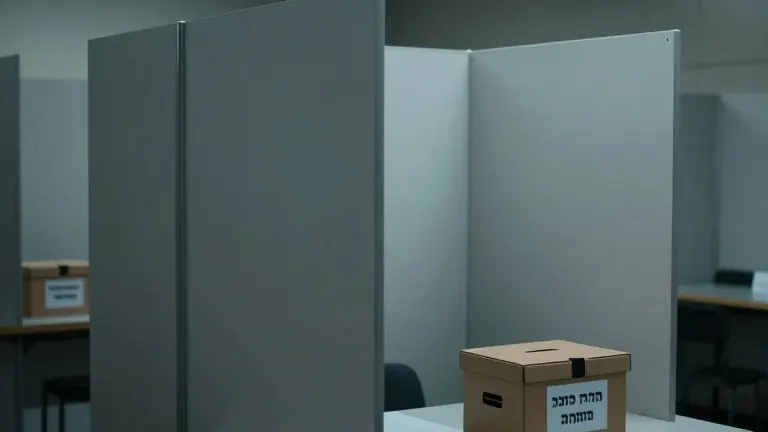
Voters selected parties rather than individual candidates for the 120-seat Knesset. No single party has ever secured the 61 seats needed to form a government alone. This structure often leads to weeks of negotiations before a new cabinet is formed.
Tensions were visible at polling stations across the country. In Kiryat Shmona, a community near the Lebanese border, a man tore down a campaign poster for Gadi Eisenkot, Netanyahu's main rival. In Tel Aviv, families of victims from the October 7, 2023 attack gathered for a moment of silence. Yona Adam, whose son Mapal was killed in the attack, asked voters to remember those who are no longer alive.
Eisenkot campaigned in Ofakim, a southern town heavily affected by the 2023 assault. He met with residents as polls opened, aiming to highlight security failures under Netanyahu's leadership. Eisenkot lost his son and two nephews in combat in Gaza. He is leading the opposition bloc, which argues that Netanyahu must be held accountable for the events of October 7.
Supporters of Netanyahu at a Jerusalem school cited his experience in security matters. Nisim Cohen, a reservist, said he was voting for the prime minister because he believed Netanyahu was responsible for keeping Israel safe. Cohen expressed a desire for the wars in Gaza, Lebanon, and with Iran to continue until a state of peace was reached.
Eyal Sher, a volunteer for the civil society group Elections Guards, monitored the voting process. He stated that every vote matters in this election. Sher described the current government as corrupt and emphasized the need to maintain procedural integrity during the count.
The Israel Central Election Committee reported that more than 7.3 million citizens are eligible to vote. This group includes approximately 330,000 young Israelis who spent their high school years during wartime. Around 12,000 polling stations opened across the country. Most locations closed at 10 p.m., with ballots counted manually immediately after voting ended.
Netanyahu, 77, has been the dominant figure in Israeli politics for nearly two decades. A victory would reinforce his status as a political survivor. U.S. President Donald Trump endorsed Netanyahu's reelection earlier this month. The late endorsement was seen as a setback for Netanyahu, who had previously touted his close relationship with the U.S. president as a key advantage.
Campaigns focused on the security breakdown of October 7 and Netanyahu's plans regarding ultra-Orthodox military service and the 2023 judicial overhaul. There was less debate over Israel's conduct in the Gaza war, which resulted in an international arrest warrant against the prime minister. Israeli occupation of parts of southern Lebanon and Syria, along with recent wars against Iran, has broad public support.
The election serves as a referendum on the government's handling of the region's conflicts. The result will shape the next phase of diplomatic and military efforts in the Middle East.
Source: WKMG-TV · original report published