Paraguay President Resigns After Bank Collapse Freezes $850 Million in Public Funds
Santiago Peña stepped down following a unanimous vote to impeach him, a move triggered by the failure of Ueno Bank and widespread protests in Asunción.
By Victoria Hayes ·
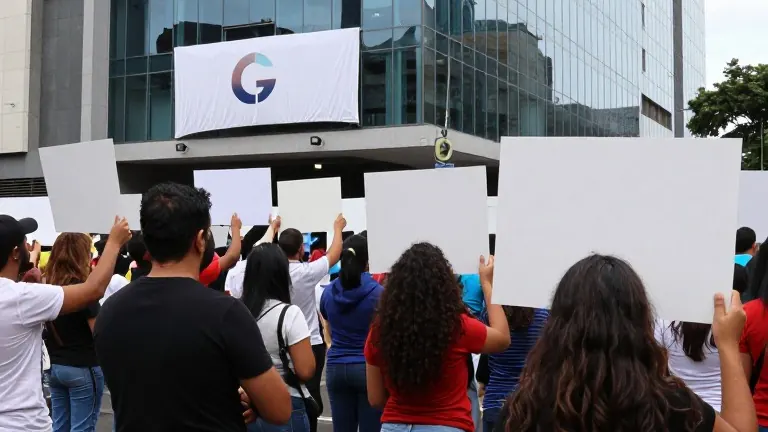
Santiago Peña, the president of Paraguay, resigned from office on Thursday after a digital bank tied to his administration collapsed, leaving millions of citizens unable to access their savings. The move came just minutes after the lower house of parliament voted to begin impeachment proceedings against him. The collapse of Ueno Bank froze approximately $850 million in public funds, sparking a wave of protests that shook the capital, Asunción, for three days.
The House of Deputies voted 78 to 0 to initiate the impeachment process, with no dissenting votes. Legislators from Peña’s own political party, the Colorado Party, joined the opposition in supporting the measure. The Colorado Party has governed Paraguay for decades. The impeachment case now moves to the Senate, where a two-thirds majority is required to formally remove the president from office. Vice President Pedro Alliana is next in the line of succession and will serve until August 2028.
Peña, a 47-year-old economist who previously worked at the International Monetary Fund, announced his resignation in a video posted on the social media platform X. He stated that he was leaving the post to preserve the stability of the country and its democratic institutions. "I have decided to submit my resignation as president of the republic," Peña said in the video. "I am convinced that no position can be above the well-being of Paraguay."
The crisis stems from Ueno Bank, which the central bank intervened on this week due to solvency issues. Peña held a stake in the company’s parent entity until last year. He also appointed Carlos Carvallo, the head of Financiera Ueno, the predecessor to Ueno Bank, as the head of the central bank. This arrangement placed the regulator in charge of overseeing the very institution it was meant to monitor.
By September, two out of every three Paraguayans were customers of Ueno Bank. The bank held deposits totaling $850 million in public funds. Of that amount, $380 million belonged to the Social Security Institute, the state pension and health fund. In June, central bank inspectors detected a pattern of high-risk loans granted to individuals linked to the bank. ABC Color, a major Paraguayan newspaper, reported that Ueno Bank had lent large sums to companies related to its owners, often exceeding legal limits and lacking sufficient collateral.
Eight executives and senior officials of Ueno Bank have been detained. Among them are Juan Manuel Gustale, the bank’s president, and Federico Miguel Vázquez, the CEO. Vázquez was also a recent business partner of Peña. The rapid expansion of Ueno Bank began shortly after it received its banking license in 2023. The institution attracted customers with generous cashback offers on supermarket purchases, opened more than 70 branches, and sponsored the national soccer team.
Protests erupted in Asunción as panic spread among depositors. Hundreds of bank employees and workers from the Vázquez Group gathered outside the Ministry of Labor on Thursday, demanding unpaid wages and severance packages. The day before, hundreds of retirees, depositors, and university students took to the streets. Police used pepper spray and rubber bullets to push back the crowds. Luis Pineda, a protester who marched toward the Congress, said, "Santiago Peña and the Colorado Party have stolen all our savings. We are tired of 70 years of looting."
Peña defended Ueno Bank and the central bank’s supervision in the month prior to the collapse, calling the concerns a smear campaign. In his resignation letter to the head of Congress, he expressed a strong desire to guarantee the return of deposited resources. He noted that behind each deposit are years of effort and family projects. The Ueno Bank logo has already been removed from the national stadium, which previously bore its name.