Reporters explain how polls work and why midterms are hard to cover
NPR correspondents answered listener questions about polling accuracy, local race dynamics, and the impact of potential House control on the White House.
By Eric Collins ·
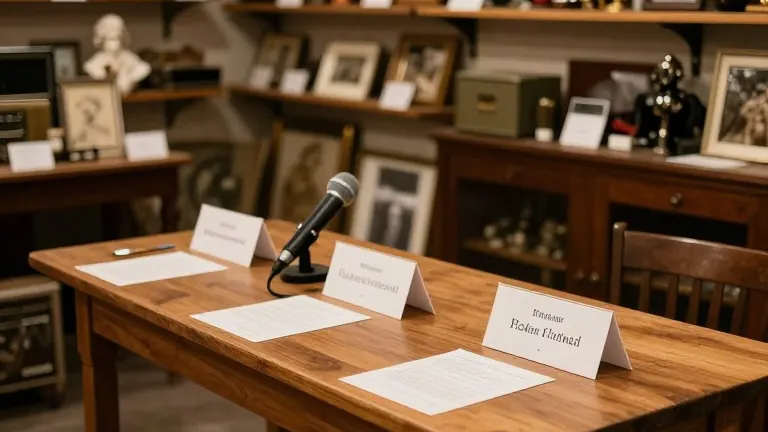
NPR political correspondents answered listener questions on the state of election reporting as voters head to the polls this week.
Polling accuracy remains a top concern for many Americans. Domenico Montanaro, the network’s senior political editor, noted that national polls have generally tracked the horse race well, though they slightly underestimated Republican turnout. He explained that a margin of error of plus or minus three or four points creates a range of six to eight points. In close elections, that fuzzy range is often all the data can reliably show. State surveys have faced more issues, including a few fake polls this cycle. Montanaro attributed this to the decline in local journalism budgets, which limits the ability of local outlets to commission rigorous, frequent polling.
Reporters also discussed the unique challenges of covering midterm elections. Sam Gringlas, a congressional reporter, said midterms offer a more intimate view of candidates than presidential years. He described visiting candidates at an antique shop, a farmer’s market, a UAW picnic, a family farm, and a smokejumper-themed brewery this year. These settings allow reporters to watch candidates interact with voters directly, rather than relying on zoom lenses from a press pen at stadium-sized rallies. Gringlas emphasized that this access provides a clearer picture of how candidates perform in the field.
Tamara Keith, a senior political correspondent, highlighted the complexity of individual races, specifically citing Nevada’s 2nd Congressional District. She described the contest as messy, noting that the Republican nominee, backed by President Trump, recently moved to the district and blamed his grandkids for a campaign misstep in an interview. The district, which Trump won by 14 points, has not been represented by a Democrat in over 40 years. Keith also mentioned that the retiring Republican congressman has used colorful language to criticize the GOP nominee and announced he voted for a Libertarian candidate.
The correspondents pointed to several ballot measures and down-ballot races that may signal national trends. Ashley Lopez, another NPR political correspondent, noted that voters in Maryland, Colorado, and Missouri are weighing redistricting questions. In Maryland, a measure to add a Democratic seat looks uncertain despite the state’s lean. In Alaska, voters are again considering their nonpartisan primary system and ranked choice voting, a contest that has historically been close. Montanaro added that he is watching the Nevada governor’s race, where incumbent Republican Joe Lombardo faces Attorney General Aaron Ford. The race has featured debate over crime and unemployment, as well as scrutiny of Ford’s past legal troubles.
If Democrats take control of one or both houses of Congress, the dynamic in Washington will shift. Montanaro explained that split power typically halts legislation unless there is compromise, which is rare given that only about 10 percent of congressional districts are competitive. He noted that the president’s party has gained seats in a midterm only twice since World War II, in 1998 and 2002. While bipartisan issues like AI guardrails might see progress, the primary tool for a Democratic-led Congress would be oversight and investigations. Montanaro warned that impeachment efforts could be politically risky for Democrats, citing the backlash Republicans faced in the late 1990s.
On the topic of debates, Gringlas observed that incumbent candidates in midterms are often reluctant to debate because they do not want to give challengers increased visibility. He stated that the role of journalists is to push candidates past their prepared talking points to reveal vulnerabilities. This process helps voters gain a clearer understanding of what the candidates intend to do if elected.
These insights were gathered through a collaboration between NPR and its Politics Podcast, where listeners submitted questions directly to the network's political team ahead of Election Day.
Source: Central Florida Public Media · original report published