Saddam Haftar Trades Maritime Concessions for a Shot at Libya's Presidency
The Benghazi legislature ratified a Turkish-backed maritime deal in a move designed to secure Ankara's support for a US-brokered power-sharing agreement.
By Eric Collins ·
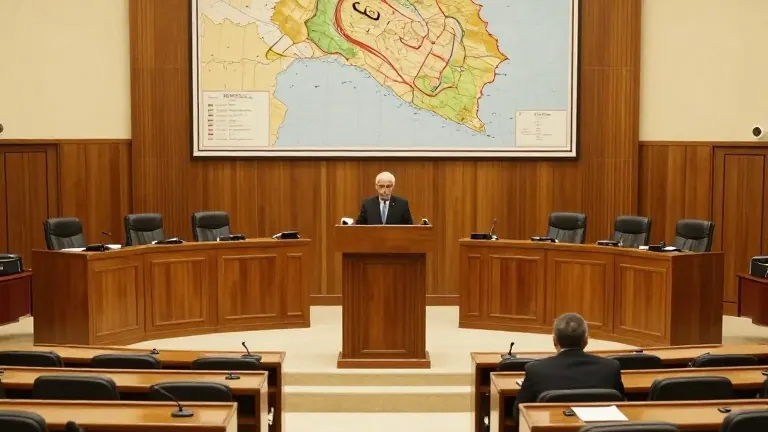
Seven years after eastern Libya rejected a maritime memorandum with Turkiye, the House of Representatives in Benghazi ratified the agreement on October 20. The vote marks a sharp reversal for a region that previously denounced the deal as a concession to Tripoli and its Turkish allies. The ratification was not an independent decision by the legislature, but a calculated step by Saddam Haftar, son of military commander Khalifa Haftar, to position himself for the Libyan presidency.
The United States is currently negotiating a power-sharing arrangement between the rival governments in Tripoli and Benghazi. Massad Boulos, the senior adviser for Arab and African affairs to US President Donald Trump, is leading the effort. The proposed deal would install Saddam as the country's president. To make this happen, he needs the backing of Ankara, which holds decisive influence over western Libya. The maritime deal serves as a token of goodwill to secure that Turkish blessing.
Saddam removed the primary obstacles to the vote in a two-week sequence of political maneuvers. On October 6, the House of Representatives unseated Speaker Aguila Saleh, who had held the position for 12 years. Saleh was a key ally of Cairo and the most vocal opponent of the maritime memorandum. His ouster cleared the legislative path for the deal and weakened the de jure authority from which his father's military command derives.
Saleh was replaced by Al-Salhin Abdulnabi, a member of the same Obeidat tribe and a former chair of the Libyan-Turkish friendship committee. Abdulnabi's appointment was designed to minimize tribal backlash while signaling the chamber's new alignment with Ankara. The move also cleared the way for a potential transfer of power from the aging Khalifa Haftar, a process that could be hastened by his advanced age.
The strategy now hinges on Washington. Saddam is counting on the Trump administration's desire for a quick diplomatic win, driven by lobbying from Turkiye and the United Arab Emirates. He hopes this appetite will override the objections of Greece, Israel, and the European Union. The EU condemned the vote, and Egypt objected to the encroachment on its exclusive economic zone. However, Egypt's response was framed in legal rather than political terms, suggesting it is keeping its options open.
Abu Dhabi supports the move because Saddam is the most loyal of the Haftar sons to Emirati interests. Installing him would cap a decade of investment in the Haftar project. A maritime line favorable to Ankara is a modest price for Abu Dhabi to pay. Egypt remains the wild card, as Cairo could use its improved relationship with Turkiye to champion Saddam's brother Khaled, who is closer to Cairo and criticized the US initiative in April.
Saddam is squeezed between a patron in Abu Dhabi he cannot cross and a partner in Ankara that has already received its reward. He is betting he can keep both on side long enough for Washington to finalize the deal. If he succeeds, the very document that sealed his father's defeat in 2020 will become the foundation of his rule. If Washington hesitates, that same document may become the end of his ambitions.
Source: Al Jazeera