Schools cut food waste via compost
Lovin Elementary in Georgia and Baltimore City Public Schools use shared tables and composting to reduce cafeteria trash.
By Eric Collins ·
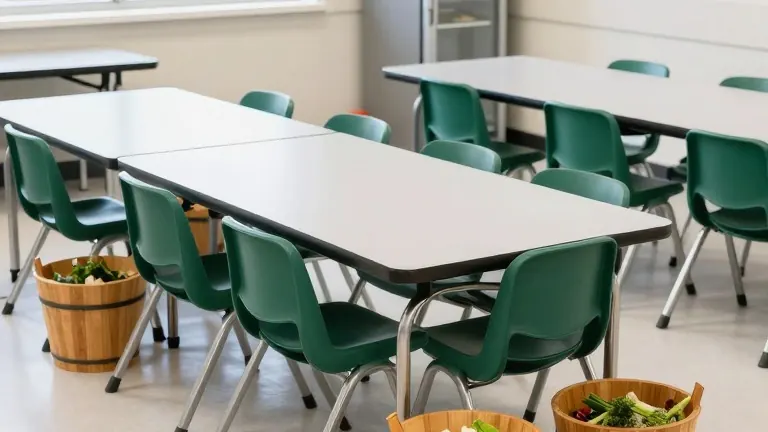
Students at Lovin Elementary School in Lawrenceville, Georgia, walk through the cafeteria carrying buckets. They collect apple cores, banana peels, and grape stems to place in an outdoor compost bin. Unopened milk cartons move to a shared refrigerator where other students take them as snacks. Leftover salad scraps feed the chickens in the school's coop.
The school, located 40 miles east of Atlanta, serves about 900 students. It began these practices after a 2018 food audit funded by the World Wildlife Fund’s Food Waste Warriors program. That audit found 589 pounds of discarded food during a single two-hour lunch period. The breakdown included 74 pounds of fruit and vegetable waste and 120 pounds of recoverable items.
Gerin Hennebaul, who leads agriculture and science initiatives at Lovin, said the school responded by creating posters and announcements. It introduced the designated sharing table and refrigerator. Subsequent audits showed food waste dropped by nearly one third. In fall 2021, the school received a grant for on-site composting. As volumes grew, staff built vermicomposting bins and began sharing waste with the local nonprofit Creative Enterprises for its garden.
Now, Lovin composts roughly 100 pounds of produce waste per week. Students collect about 100 items from the share table each lunch period. Unclaimed items go to the school's food pantry for community members. Student Aissatou Brown noted that less food goes to the landfill and the cafeteria floor stays cleaner.
Baltimore City Public Schools, which serves more than 76,000 students, uses similar methods. Many of its schools feature share tables and some have composting systems. The district operates a 33-acre learning farm to teach students about food resources. Anne Rosenthal, a farm-to-school specialist for the district, said hands-on experience helps students engage with healthy options.
Federal figures indicate public schools serve more than 30 million lunches daily, mostly through the Agriculture Department's National School Lunch Program. Experts say cafeteria waste costs schools money and adds methane to landfills. Carmen Byker Shanks, director of scientific strategy at the Center for Nutrition and Health Impact, said solutions vary by school. She noted that interventions work when students, nutrition staff, and teachers collaborate to find answers.
The World Wildlife Fund analyzed waste at 46 schools in eight states in 2019. It estimated that schools nationwide waste about 530,000 tons of food per year, costing them $1.7 billion. The WWF program has worked with more than 1,000 schools, with some reporting waste reductions of up to 70 percent.
Pete Pearson, a WWF vice president, said constraints like budgets and federal meal requirements limit flexibility. He emphasized involving students in the process. The Agriculture Department recommends schools reassess purchasing and preparation methods to reduce waste. Its website offers guides for audits, share tables, and scheduling recess before lunch.