Southern California residents set clocks back Sunday
The shift restores Pacific Standard Time, bringing earlier morning light and earlier evening darkness.
By Eric Collins ·
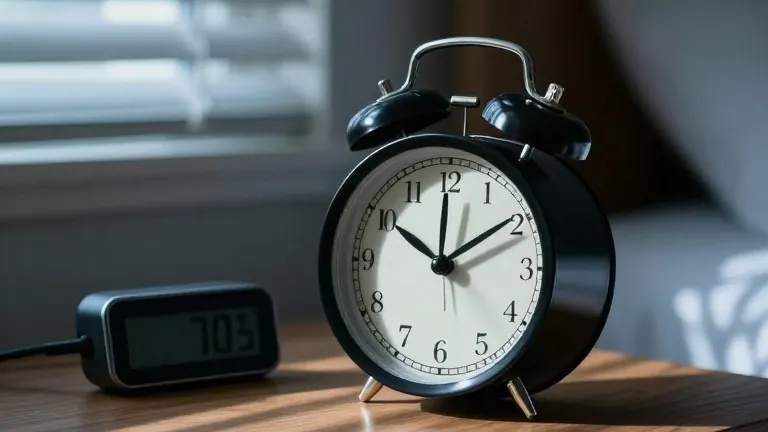
Residents in Southern California will turn back their clocks at 2 a.m. on Sunday, Nov. 1, as daylight saving time ends. The change restores Pacific Standard Time across the region. While many smartphones and computers update automatically, residents should manually reset appliances, wristwatches, and some vehicles.
The time shift alters the daily schedule for sunlight. On Sunday, the sun will rise at approximately 6:13 a.m. and set near 5 p.m. This adjustment brings daylight earlier in the morning but causes darkness to fall earlier in the evening.
Safety officials advise drivers to exercise caution on the roads. The National Highway Traffic Safety Administration recommends slowing down near school zones and bus stops. Darkness returns earlier, increasing the risk for pedestrians and children. Drivers should watch for people walking in dim light. Pedestrians are encouraged to wear bright or reflective clothing and carry flashlights after dark.
Fire departments suggest using the clock change as a prompt for home safety checks. Residents should test smoke alarms and review their fire escape plans. Checking the batteries in carbon monoxide detectors is also recommended during this period of transition.
Federal law dictates the schedule for these changes. Daylight saving time began on March 8 and concludes on the first Sunday of November. Hawaii and most of Arizona do not observe the shift. Neither do American Samoa, Guam, the Northern Mariana Islands, Puerto Rico, and the U.S. Virgin Islands. California voters approved Proposition 7 in 2018, but the measure only granted the Legislature the authority to change the schedule with a two-thirds vote. It did not end the twice-yearly clock changes.
Current federal law allows California to adopt standard time year-round. The state cannot keep daylight saving time permanent unless Congress changes the rules. The House of Representatives voted 308-117 on July 14 to approve the Sunshine Protection Act. This bill, known as H.R. 139, would make daylight saving time permanent in states that currently observe it. The measure has moved to the Senate Committee on Commerce, Science and Transportation.
The Senate companion measure, S. 29, received a 16-12 vote in committee in April 2025. However, the panel requires another vote to comply with in-person attendance rules. Neither bill has reached a floor vote in the Senate. President Donald Trump urged senators to approve the House bill on Monday. He posted on Truth Social that the Senate is letting the bill die despite majority support. Trump previously called for eliminating daylight saving time in December 2024 but later shifted his position to back permanent daylight saving time.
Some senators oppose the House bill, citing concerns for children in northern states. They argue permanent daylight saving time would force students to travel to school before sunrise in winter. The nation experimented with permanent daylight saving time in 1974 during an energy crisis. Congress ended the experiment early after public support dropped. If federal law does not change, clocks will move forward one hour at 2 a.m. on March 14, 2027.
Source: Community Paper · original report published