Democrats sweep Florida House, win governorship in historic midterm shift
Voters across Orlando, Deltona, and the broader Central Florida region voted for Democratic candidates in every U.S. House district and the state governor's race, ending decades of Republican dominance in the Sunshine State.
By Daniela Ortega ·
Central Florida voters delivered a decisive mandate on Tuesday, electing Democratic candidates to every U.S. House seat in the region and choosing a Democratic governor in a statewide race that closed a long period of Republican control. The results, confirmed by election officials across the state, mark a fundamental shift in the political landscape for residents of Orlando, Deltona, Kissimmee, St. Cloud, Sanford, and Apopka. For the first time in years, the district offices that will represent these communities in Washington and Tallahassee will be held by members of the same party.
The governor's race was the centerpiece of the state's elections, an open contest with no incumbent running. The Democratic candidate secured a victory that aligns with the broader national trend, where Democrats captured the governorships in five states that had previously been controlled by Republicans. In Florida, this win completes a Democratic trifecta, meaning the party now holds the governor's mansion and majorities in both chambers of the state legislature. This level of control gives the administration significant power to shape policy and set the legislative agenda for the next two years.
In the U.S. House races, the Democratic sweep was consistent across the Central Florida districts. Every seat in the state was on the ballot, and voters in each district selected a Democrat to represent them in Congress. This outcome contributes to the national picture where Democrats picked up at least 43 House seats, including 42 that were previously held by Republicans. The shift in Florida is particularly notable given the state's historical status as a Republican stronghold, with decades of continuous control in many of these specific districts.
The state legislative races reinforced the governor's mandate. Democrats won control of both the Florida Senate and the Florida House of Representatives. This legislative control is part of a larger national pattern where Democrats won 46 of the 88 state legislative chambers on the ballot. In Florida, the change in party control for both chambers means that the new governor will work with a legislative majority that shares their party affiliation, potentially streamlining the passage of bills and budget measures.
Nationally, the election results indicate a significant shift in power in Washington. Democrats secured majorities in both the U.S. House and the U.S. Senate. The party gained at least seven Senate seats, all of which were previously held by Republicans, resulting in a 54-44 majority. In the House, the Democratic majority stands at at least 250 to 157. This level of control places the party in a strong position to advance its legislative priorities, including oversight of the executive branch and potential budget negotiations.
The election has been characterized as a wave election by political analysts, as the net loss of at least seven Senate seats by the Republican Party places this cycle in the top 20% of election years in terms of seat swings against the president's party. While the House net loss of 42 seats is slightly below the threshold for a wave election, the combined gains in state and federal offices represent a substantial realignment. This outcome provides a clear check on the presidential administration, which is currently undergoing leadership changes in key advisory roles.
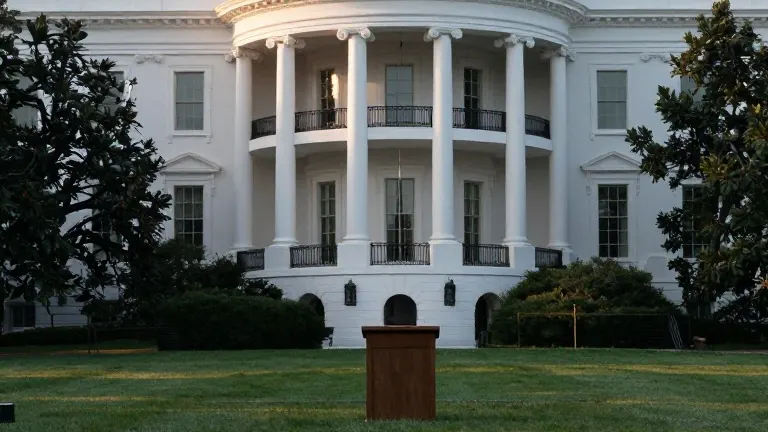
In the White House, President Donald Trump has responded to the election results with a series of personnel announcements. On Saturday, he stated that he had offered the position of White House press secretary to UFC owner Dana White. Trump posted on social media that he asked White, whom he described as a warrior, to become his chief spokesperson. The White House did not immediately confirm the offer, and White was in London for a boxing event at the time of the announcement. This move follows a period of transition in the administration, including the appointment of Stephen Miller as the next chief of staff.
The timing of these changes comes as the administration faces a new congressional majority. The historic wins by Democratic candidates in areas that Republicans had held for decades have led to a divided government in Washington. This shift is expected to influence the legislative agenda, with the new Congress likely to focus on oversight and potential investigations. The appointment of a new press secretary and chief of staff signals an effort to manage communications and strategy in response to the changed political environment.
For Central Florida residents, the immediate impact of these results will be seen in the policies pursued by the new governor and the state legislature. The Democratic trifecta allows for coordinated action on issues such as infrastructure, education, and economic development in the region. The new U.S. House members from the area will also play a role in federal policy, working within a Democratic majority to shape national legislation. The election results provide a clear direction for governance in the coming years.
The final counts in the state races were certified by election officials, confirming the shift in power. The governor's victory and the legislative control represent a comprehensive change in the state's government. As the new administration takes office, the focus will shift to implementing the platform on which the candidates campaigned. The election results in Central Florida mirror the national trend, with voters choosing Democratic candidates for key offices at both the state and federal levels.