Florida voters face record spending as polls open
The 2026 midterms are shaping up as the most expensive in history, with distinct fundraising advantages for both parties as Floridians head to the polls.
By Peter Graham ·
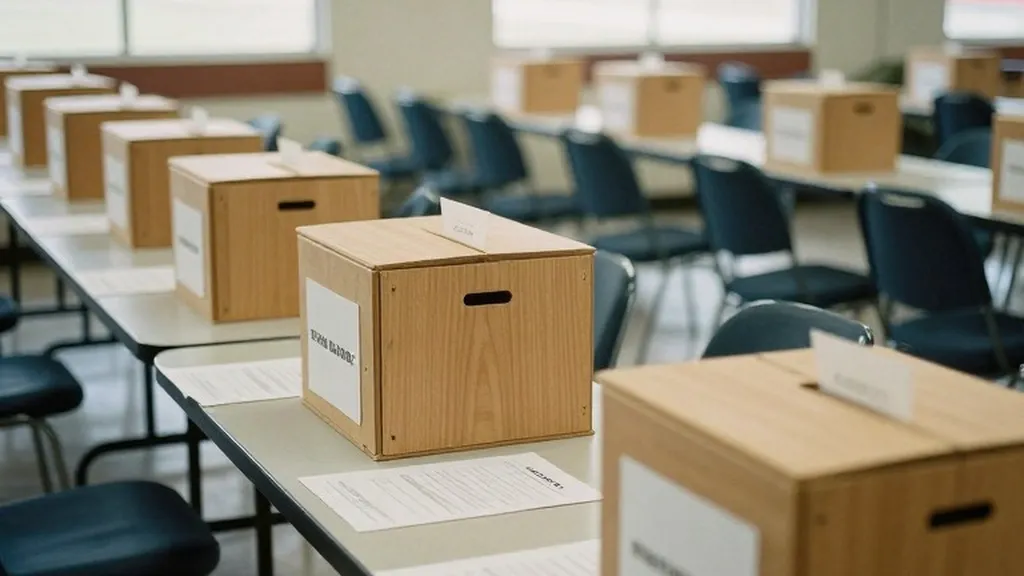
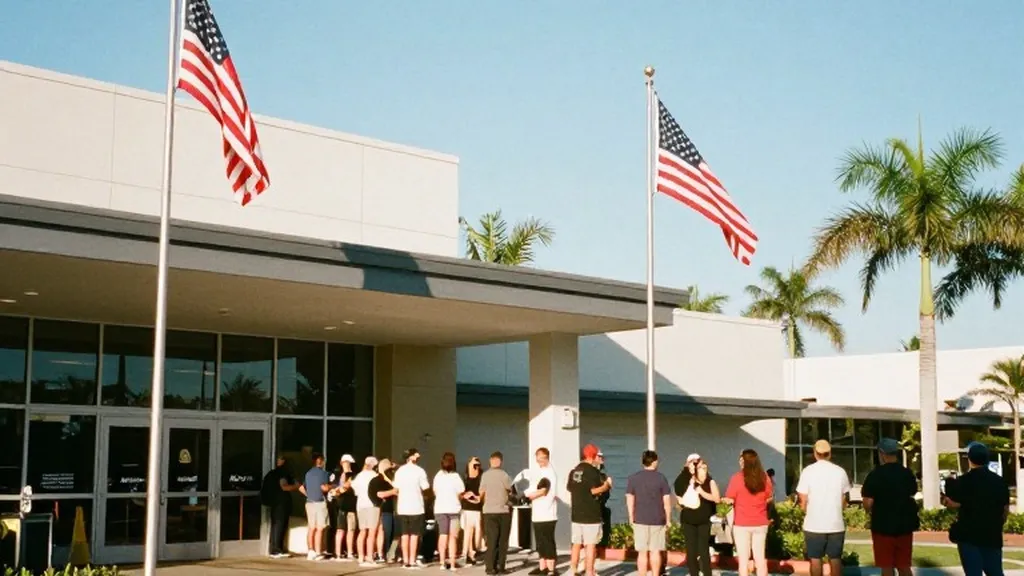
Polls across Central Florida opened at 7 a.m. for the 2026 midterm election, with voting continuing until 7 p.m. local time. Voters in Orlando, Deltona, Kissimmee, St. Cloud, Sanford, and Apopka are casting ballots to determine the balance of power in Congress for the remainder of President Donald Trump's second term. The Associated Press notes that the election is widely viewed as a referendum on the president's performance, with many voters expressing frustration over high prices and an unpopular war with Iran. Early voting has been robust, with more than 57 million Americans having already cast ballots as of Monday, a figure that surpasses the early vote totals from four years ago in many closely watched states.
Florida voters face a crowded ballot that includes a special election for the U.S. Senate, a race for governor, and contests for all of the state's U.S. House seats. The Senate race features incumbent Ashley B. Moody, a Republican, seeking to secure the seat that was created after Marco Rubio was elected to the U.S. Senate in 2022. In the governor's race, the seat is open as no incumbent is running. Parties on the ballot for the governorship include the Democratic, Libertarian, No Party Affiliation, and Republican parties. Additionally, Florida voters will weigh in on three constitutional amendments, including changes to the budget stabilization fund, property tax exemptions for agricultural equipment, and adjustments to homestead tax exemptions.
The financial scale of this election is unprecedented. According to an analysis by the Associated Press of data from AdImpact, the 2026 elections are likely to be the most expensive in American history. The funding dynamics present a complex picture that varies by level of spending. Republican committees have outraised and outspent their Democratic counterparts at the committee level. This advantage has been bolstered by support from Trump-affiliated groups and significant contributions from Elon Musk. However, the dynamics shift at the candidate level, where Democrats have outraised their Republican opponents, creating a dual financial landscape that may influence campaign strategies in key districts.
A striking disparity emerges when examining how Republican funds were deployed in television advertising. The Associated Press reports that 88.1 percent of Republican general election TV ad spending was directed toward states and districts that Donald Trump won in the 2024 presidential election. Within that total, more than $850 million was spent in areas where Trump won by a margin of 10 points or more. This heavy investment in safe Republican territory contrasts with the Democratic strategy, which has focused resources on competitive districts where the outcome remains uncertain. The concentration of funds in high-margin Republican areas suggests a strategy aimed at maximizing turnout and reinforcing the party's base in districts that are less likely to flip.
The new congressional maps in Florida add another layer of complexity to the House races. Florida is one of six states using new district maps following mid-decade redistricting, a process that also affected California, Missouri, North Carolina, Tennessee, and Texas. While Republicans attempted to use redistricting to beat the historical midterm pattern of the president's party losing seats, the new districts in Florida may not vote exactly as drawn. This uncertainty has led both parties to invest heavily in local races, where the margin of victory could determine the final tally in the U.S. House. Democrats need a net gain of three districts to take control of the House, while Republicans can afford to lose no more than two seats.
National polling data provides context for the local contests. The Associated Press and NORC Polling conducted a survey indicating that 35 percent of U.S. adults approve of President Trump's job performance, while only 25 percent approve of his handling of the economy. Approximately seven in 10 respondents believe the country is heading in the wrong direction, with most blaming the president for high prices. These sentiments are likely influencing voter decisions in Florida, where economic concerns are a prominent issue. The high cost of living has become a central theme in campaign messaging, with candidates on both sides emphasizing their plans to address inflation and stabilize household budgets.
Voter sentiment in Central Florida reflects these national trends. Some voters express strong support for the president, citing his handling of the administration as a positive factor in their decision to vote. Others point to rising costs in healthcare, taxes, and daily goods as reasons to support change. The Associated Press quoted a voter in Raleigh, North Carolina, who noted that they are paying more for everything, a sentiment echoed by many in the Orlando area. Another voter in Palm Beach Gardens expressed confidence in the president's work, highlighting the divided public opinion that makes this election so competitive.
The race for the U.S. House in Florida is particularly contentious, with all seats up for grabs. The Associated Press notes that 60 House incumbents nationwide are not running again, creating open seats that are often more volatile than contests with an incumbent. In Florida, the combination of redistricting and high national attention has made several districts battlegrounds. Campaigns have focused on local issues such as traffic, infrastructure, and property taxes, while also leveraging the broader narrative of the election as a check on the president's power. The outcome of these races will determine whether the president's party retains its majority in the lower chamber of Congress.
Beyond the federal races, Florida voters are also deciding on state and local offices. The ballot includes contests for the State Senate, the State House, and various judicial positions. These races, while less prominent in national coverage, have significant implications for state policy and local governance. The Associated Press notes that the stakes of the midterm extend beyond the immediate control of Congress. If Democrats win even one chamber, investigations and possible impeachment proceedings are likely to increase. House Democratic Leader Hakeem Jeffries has outlined a 100-day agenda focused on the cost of living and oversight, which he would implement if his party gains control of the House.