ICE Arrests Hit 51,000 in August as Political Backlash Builds
Record enforcement numbers contrast with voter disapproval, creating a fractured environment for Republican midterm campaigns.
By Eric Collins ·
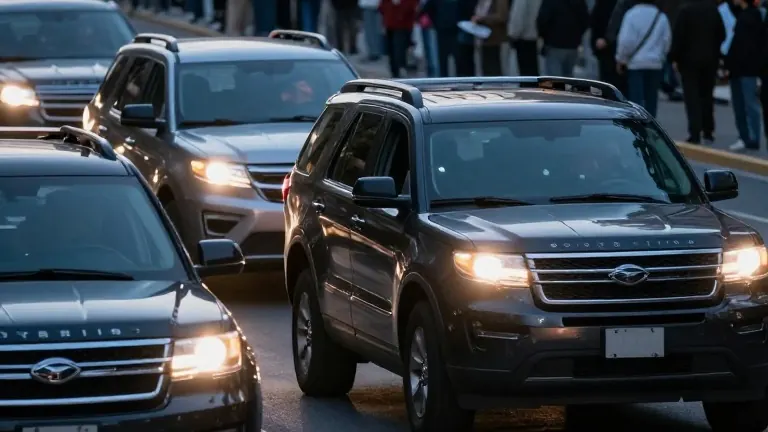
U.S. Immigration and Customs Enforcement officers arrested almost 51,000 immigrants in the country illegally in August, according to the Department of Homeland Security.
The figure represents a monthly record, rising from 49,000 in July and 43,000 in June. The Migration Policy Institute estimates that 660,000 people have been deported in the past fiscal year, falling short of the administration's stated goal of 1 million annually. These enforcement actions have coincided with a sharp increase in public opposition, particularly following violent confrontations in Minneapolis that have altered the political tone of the 2026 midterm cycle.
The current crackdown marks a departure from the border dynamics that defined the 2024 presidential campaign. At that time, images of tent camps and caravans in Central America dominated the news cycle. Illegal border crossings from Mexico peaked at a record 250,000 in December 2023. President Trump campaigned on a pledge to remove these individuals, warning of an "invasion" and claiming, though incorrectly, that immigrants were driving crime spikes and eating household pets. His focus resonated with voters who felt overwhelmed by the situation under President Joe Biden.
Support for the new administration's approach has shifted since Trump took office. Polling indicates that while some support remains, many voters now disapprove of the president's handling of immigration. Maryland Sen. Chris Van Hollen, a Democrat and prominent critic of the policy, argued that the public wanted strong border security but received what he described as "shredding the Constitution, mass deportations and killing American citizens on the streets of Minneapolis." In contrast, Mark Krikorian, executive director of the Center for Immigration Studies, suggested the backlash is a side effect of success. He noted that the administration dramatically reduced illegal crossings, a political reality that is often unpopular with the public despite the achievement.
The turning point for public sentiment occurred in Minneapolis, where more than 2,000 federal officers were deployed. The presence of masked agents in unmarked vehicles drew tens of thousands of protesters to the streets. Two U.S. citizens, Renee Good and Alex Pretti, both 37, were killed during confrontations with agents. Michael Pretti, Alex’s father, told reporters that the family is haunted by videos showing his son was shot multiple times in the back while on the ground. He emphasized that his son had a holstered gun he was legally allowed to carry, yet footage does not show him brandishing the weapon or attacking agents before his death. Following these killings, the White House removed Border Patrol commander Gregory Bovino and Homeland Security Secretary Kristi Noem from their leadership roles.
The political response is dividing the Republican party. Hardliners like Tennessee Sen. Marsha Blackburn are vowing more deportations as she runs for governor. However, other candidates are distancing themselves from the administration's tactics. Florida Rep. Maria-Elena Salazar, a Cuban-American Republican, criticized the crackdown in a campaign advertisement. She has sponsored legislation that would allow immigrants in the country illegally to remain if they have otherwise followed the law. Colorado Rep. Gabe Evans, a Republican grandson of a Mexican immigrant, is also distinguishing himself from Trump in his swing district. In New Hampshire, former Sen. John Sununu has criticized ICE's use of masks to conceal agents' identities.
Democratic candidates are adjusting their messaging to match voter sentiment. Texas Senate candidate James Talarico identifies as a "border security Democrat" who supports hiring more Border Patrol officers and using surveillance technology. In a July press conference on the Mexico border, he stated that the Biden administration failed the country on the southern border. Frank Sharry, an immigrants' rights activist who consults with the centrist group Third Way, observed that Republicans are attempting to define Democrats as supporters of open borders. Sharry added that he is unaware of any candidate in a swing race who is not calling for secure borders and the removal of criminals.
The next major test for these divided coalitions will be the 2026 midterm elections. Republicans aim to maintain control of Congress, but the fractured messaging on immigration presents a challenge. Democrats are moving away from their previous stance to align with the growing demand for stricter enforcement. The Laken Riley Act, which passed with bipartisan support in 2024, required detention without bond for noncitizens accused of violent crimes. As the election approaches, the gap between the administration's enforcement numbers and the public's tolerance for the methods used to achieve them continues to widen.
Source: The Macomb Daily