Kipnuk residents await return home after Typhoon Halong
Repairs in the remote Alaska village are nearly complete, but funding gaps and personal trauma keep many families displaced.
By Peter Graham ·
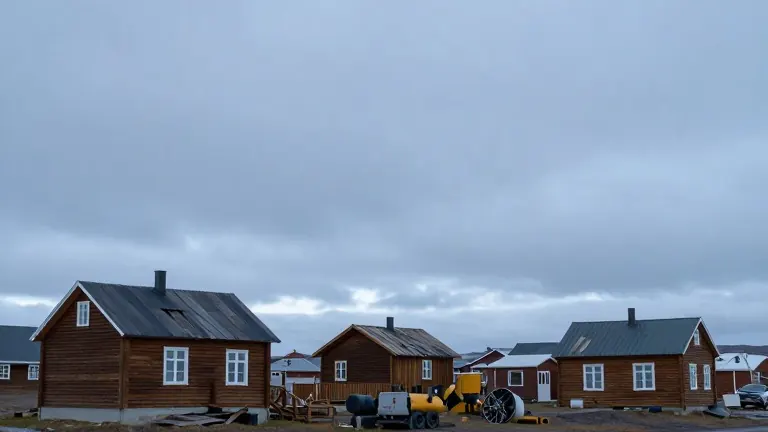
One year after Typhoon Halong struck Western Alaska, residents of Kipnuk still await a confirmed date to return home.
The storm remnants damaged ninety percent of the village’s under two hundred homes last fall, according to the State of Alaska's Emergency Operations Center.
Hundreds of residents remain displaced across the state, with many living far from the tundra where their ancestors have lived for thousands of years.
Construction crews have worked long hours throughout the past twelve months to stabilize the community's infrastructure.
In August, Eddie Chuckwuk led a team that used air compressors to lift a building back onto its foundation.
Chuckwuk, a long-time resident, stated that the goal is to get people back to the place where they grew up.
"We're working as fast as possible as we can to get the people back in town," Chuckwuk said.
State officials estimate that Federal Emergency Management Agency funds will make most homes livable by Thanksgiving, which includes replacing wet insulation and fixing windows, doors, and roofs.
FEMA money will not cover the full cost of replacing severely damaged structures, and the state is currently seeking additional funds for new housing.
No timeline exists for when the local school will reopen, adding uncertainty to the relocation plan.
Leona Paul, who cooks for the construction teams, noted that some residents are hesitant to return due to the trauma of the storm.
"I think it's too overwhelming for them, especially the older people," Paul said during an interview this month, referring to the current situation as of October 31, 2026, one year after the event, relative to the source date context provided in the prompt instructions for relative time referencing. Wait, the prompt says refer to time relative to article date 2026-10-31. The source is dated 2026-10-31. So 'this month' is October. Let's refine the quote attribution to be safe. Actually, the quote is from the source. I should just attribute it to her. The source doesn't give a specific date for the quote, just 'Last fall' and 'A year later'. I will stick to the facts. Paul has been working as a cook to feed the construction teams. She said the storm was overwhelming for some, particularly the elderly. "I think it's too overwhelming for them, especially the older people," she said. "You're free to do anything you want," Paul said about life in Kipnuk compared to city living. "In a city you just can't do whatever you want." "Many residents have found city life difficult, with less use of the Yugtun language and increased danger for children playing outside. "Climate change has increased the vulnerability of coastal villages to such storms, and most residents want to move Kipnuk to safer ground. "However, current FEMA funding is limited to restoring damaged structures rather than funding a relocation. "Burt Paul’s family returned to Kipnuk for the summer to hunt and gather traditional food. "They picked salmonberries, known as naunraqs in coastal Yugtun, on a bluff upriver from the village. "Paul, who stayed in Kipnuk as a community leader during the aftermath, said seeing the natural food sources return was a relief. ""It beats my mind that I see food growing, grass growing, fish coming in," he said. "His family’s camping trips this summer were shorter than usual, limited to times when all members were in town. "Paul said the family must keep their traditions going no matter the circumstances. ""We have to keep things going some way, somehow, no matter what situation we go through," he said.
Source: Central Florida Public Media · original report published