Ohio Town Group Pushes Data Center Bans to 10 Local Ballots
Conserve Ohio volunteers are gathering signatures for a statewide constitutional amendment that could reach voters in 2027.
By Victoria Hayes ·
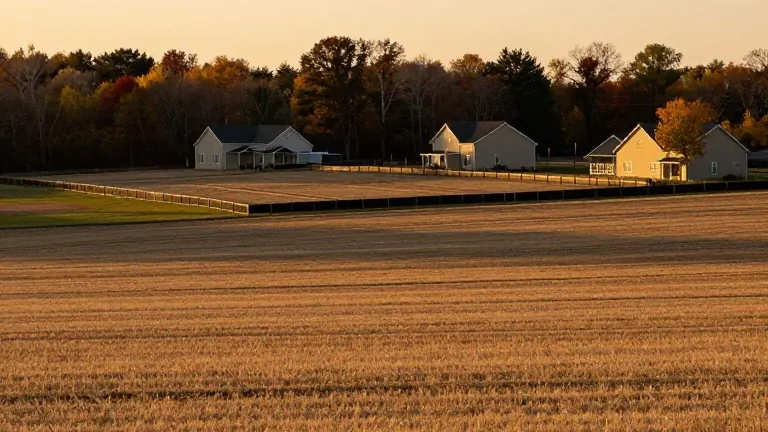
MT. ORAB, Ohio, Nick Owens walks the edge of 1,000 acres of farmland and trees that property records show changed hands in 2024 and 2025. In a few spots, the land sold to a data center developer runs up against two-story homes. Construction has not started. Nondisclosure agreements leave residents without answers about timing.
Owens, a lifelong Republican and self-described small-town attorney, says he has spent countless hours on the matter. He teamed with another local attorney and a real estate agent to form Conserve Ohio, a volunteer network active in nearly all 88 counties. Members include Democrats, Republicans and Independents.
"We all share the same ethos and the same passion for preserving our way of life, preserving the future of Ohio, frankly, from the hyperscale data center invasion," Owens said. "It's really beautiful."
Data centers began arriving in Ohio more than a decade ago, drawn by inexpensive land, energy infrastructure and tax breaks. They generate tax revenue, school funding and construction jobs, along with a smaller number of permanent positions. Owens points to the power plants hyperscale facilities require and the emissions they produce.
"Should the school have extra money or the local government have extra money so we have a constant hum and ridiculous amounts of emissions and pollution?" he said. "Our community is not for sale."
Conserve Ohio is now backing ballot initiatives in 10 communities this fall. The measures would amend local charters to bar construction of large-scale data centers, the kind built to power artificial intelligence. Municipal and county governments across Ohio have adopted temporary pauses, but these proposals would write bans into local law. "All too often you hear from the politicians, 'Well, the community should have a say,'" Owens said. "We're going to find out in ten communities whether or not the communities want them."
The group is also gathering signatures for a statewide constitutional amendment to ban large-scale data centers. Volunteers plan to put that question to Ohio voters in 2027. Linda Moodie, an independent who volunteers with Conserve Ohio, set up a booth at the Halloween on the Green celebration in Fairfield on a recent evening, handing candy to children and petition clipboards to parents. "The closer it hits to home, the more people that are going to want to do something," Moodie said.
The issue has moved into statewide campaigns. Former Democratic Senator Sherrod Brown has called incumbent Republican Senator Jon Husted "the face of data centers," noting that Husted welcomed tech companies as lieutenant governor. Husted has accused Brown of hypocrisy over Brown's past support for the projects. Husted also introduced a bill in Congress to make data centers pay for grid upgrades and other costs tied to their energy use; Senate Democrats blocked it as toothless.
Owens served as a Trump delegate at the 2024 Republican National Convention. He declined to say how he is voting this fall but said the data center issue, along with $6 diesel, have dampened Republican enthusiasm. His county voted 80% for Trump in 2024. "Two years ago you would have seen Donald Trump signs left and right," he said, noting the absence of yard signs across Mt. Orab. Trump posted on Truth Social that communities should welcome data centers to be "successful and rich," adding, "If we kill the Golden Goose, you will only have yourselves to blame." Owens called the remarks "tone deaf." "I mean, no one wants to be poor or backwards," he said. "I want our regular way of life."
Standing at the edge of the property on a crisp fall day, the site is nearly silent but for the birds. No date has been set for construction.
Source: Central Florida Public Media · original report published