Ukrainian Firms Deploy AI Drones That Fly Final 500 Meters Autonomously
Yaroslav Azhnyuk's companies produce autonomous systems used by dozens of military units to target vehicles and tanks with reduced human input.
By Victoria Hayes ·
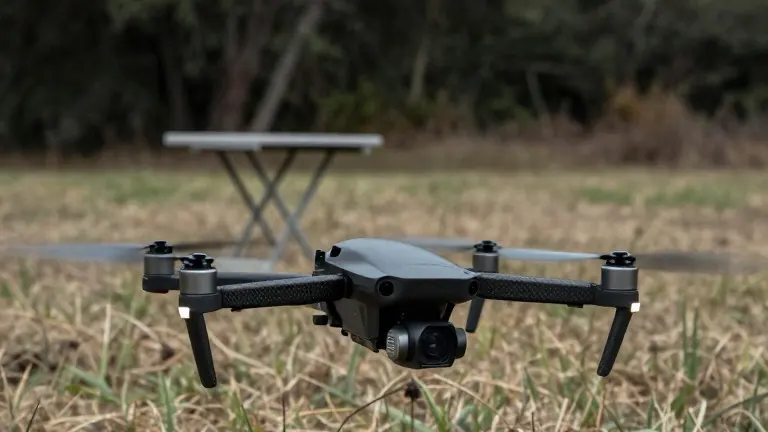
Yaroslav Azhnyuk leads two Ukraine-based defense firms, The Fourth Law and Odd Systems, that are producing artificial intelligence powered drones for the Ukrainian military. Dozens of military units currently use their autonomous drone, designated the Lupynis-10-TFL-1. Azhnyuk, a 37-year-old computer scientist, transitioned from the consumer tech sector to defense following the Russian invasion in 2022. He previously founded Petcube, a company that sold one million AI-powered pet cameras in the United States.
The Lupynis TFL-1 combines a standard first-person-view drone with an autonomous terminal guidance unit. This onboard computer takes control of the flight during the final 500 meters, approximately 0.3 miles, of its mission. Azhnyuk describes the technology as distinct from the large language models powering chatbots or the self-driving systems in Tesla vehicles. Instead, the drone uses simple image recognition tools to navigate, select targets, and fly toward objectives without continuous human piloting.
The Fourth Law names its weapons after Ukrainian intellectuals and artists persecuted by Russians in the 20th century. The Lupynis TFL-1 honors Anatoliy Lupynis, a poet and political activist who spent decades in Soviet imprisonment and psychiatric care. Azhnyuk stated that naming the equipment after these figures helps resurrect their legacy. He noted that their ideas remain relevant and are now fighting back through the technology.
During a test in an overgrown field outside Kyiv, a team member known by the call sign Stab demonstrated the drone's capabilities. The drone carried a camera and a microcomputer running a deep-learning neural network trained on hours of combat footage. The system recognized targets including vehicles, light-armored vehicles, tanks, and flying objects. A pilot using the call sign Professor guided the drone to a target, which was a dilapidated car driven by an employee. Upon seeing a red flash on the monitor, the pilot released the control stick. The drone then flew itself to the car, using onboard algorithms to maintain course.
Azhnyuk emphasized that the AI provides an asymmetric advantage when facing opponents with superior capabilities. He claimed the technology could make forces 10,000 times more effective. He also noted that AI-enabled drones are difficult to jam compared to traditional systems. Humans still select the initial target, but the drone executes the final approach autonomously.
President Volodymyr Zelenskyy has warned that AI could lead battlefield decisions as soon as next year. Azhnyuk acknowledged this rapid development but argued that the ethical concerns apply to all tools, from fire to steel. He said that if adversaries use AI for offensive decision-making and defenders refuse to use it, the defenders lose. He highlighted that AI systems make decisions in microseconds, while human control takes minutes to days. For Azhnyuk, the primary goal is survival, noting that if Ukraine loses, there is no way to argue about the ethics of AI.
The Fourth Law tests its drones daily to ensure they remain reliable. Stab insisted that safeguards prevent the drones from going rogue. The company continues to refine its thermal cameras and autonomous flight paths to meet the immediate needs of the Ukrainian military in the ongoing conflict.
Source: Central Florida Public Media · original report published
More Business · Orlando news · Buyer Beware · Report a business · Got a Story?