Democrats Win House and Senate Control
Voters rejected President Trump's policies and redistricting efforts, delivering a historic sweep in Texas and shifting the balance of power in Washington.
By Eric Collins ·

Democratic candidates claimed control of both chambers of Congress in Tuesday's midterm elections, a result that exceeds the margins predicted by pre-election forecasts. The party secured majorities in the House and the Senate, a level of victory that surprised even seasoned political observers. The outcome marks a sharp reversal for the Republican Party and sets the stage for a new legislative dynamic in Washington.
President Donald Trump’s declining approval ratings played a central role in the Republican defeat. Since the start of the Iran war, his approval rating dropped from 48 percent to a low of 36 percent in average polls. A voter survey commissioned by broadcast networks and the Associated Press found that 62 percent of voters disapproved of his job performance. The same survey indicated that 62 percent of respondents believed Trump prioritizes his own interests over the nation's needs.
Economic concerns remained the top issue for voters. A plurality of survey respondents identified the economy as their primary concern, and two-thirds stated that Trump’s policies had worsened economic conditions. Gas prices rose and the conflict in Iran continued to weigh on voters who were already feeling financial pressure. This discontent contributed to the rejection of the Republican ticket across the country.
Texas became a focal point for the Democratic surge. The state, which has a majority-minority population, delivered a comprehensive Democratic victory. Democrat James Talarico won the Senate race by approximately 12 points, a margin of 1.1 million votes. This marks the first time Texas has sent a Democrat to the Senate since 1988. Incoming Governor Gina Hinojosa won by 7 percentage points, or nearly 700,000 votes. Democrats also flipped two congressional districts that President Trump won by at least 14 points in 2024.
Latinos emerged as a decisive voting bloc in this election. In 2024, the group supported Trump by a narrow margin, largely driven by inflation concerns. In this cycle, voters moved away from Republicans due to aggressive deportation tactics that extended beyond the targets promised by the administration. Approximately 60 percent of all respondents disapproved of Immigration and Customs Enforcement, while 68 percent of Hispanic respondents expressed disapproval of the agency's handling of its duties.
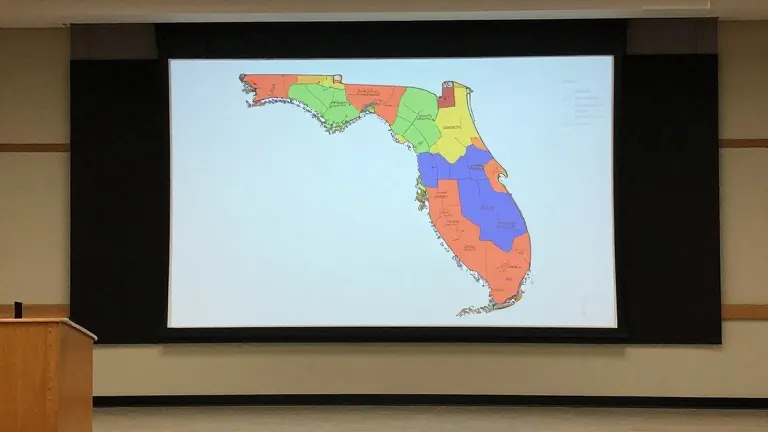
Republican efforts to manipulate district boundaries through redistricting failed to protect their seats. President Trump encouraged conservative states to redraw maps to secure more House seats, a strategy that backfired in places like South Texas. The process weakened safe Republican districts and made them competitive, a phenomenon described as a cautionary tale of the dummymander. Democrats capitalized on these structural changes to win seats in previously reliable Republican areas.
The Democratic victory in the Senate race in Texas occurred despite a massive financial advantage for the GOP. Republicans spent more than $413 million on that specific contest and still lost. The result suggests that money alone could not overcome the shift in voter sentiment. Democrats now hold the keys to Congress and face the challenge of governing without a filibuster-proof majority in the Senate.
New York Senator Chuck Schumer, who may seek the majority leader role again, promised that relief is on the way for Americans. However, Democrats face a difficult path forward. They do not have enough votes to override vetoes, and President Trump signaled his intent to block legislation by posting an image of a red hat with the word VETO on his social media platform. The party must balance its messaging with its limited legislative power to avoid disappointing the voters who delivered this mandate.
More Politics · Orlando news · Report a business · Got a Story?