Israel faces government deadlock after election results
Neither Benjamin Netanyahu nor Gadi Eisenkot can secure a majority in the Knesset, leaving the country in a complex political stalemate.
By Peter Graham ·
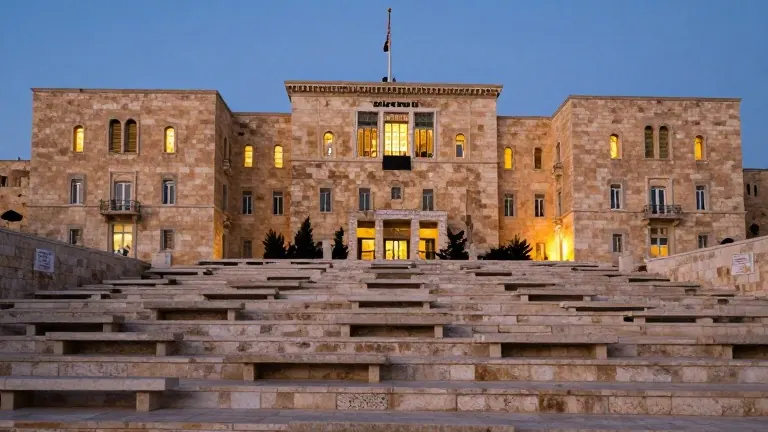
Israel's 120-seat Knesset is locked in a standoff after the latest election produced a fragmented parliament where neither major candidate can claim a majority. The final tallies show that opposition forces hold more seats than Prime Minister Benjamin Netanyahu's right-wing bloc, yet neither side commands the 61 votes needed to form a government. This stalemate leaves the nation without a clear executive authority as coalition talks begin.
The election marked a high-turnout event in recent history. Benjamin Netanyahu's Likud party won the most individual votes, but his alliance of right-wing, far-right, and ultra-Orthodox parties failed to reach the required threshold. Gadi Eisenkot, a center-right former military chief of staff, leads a bloc that also lacks a majority. Eisenkot's coalition depends on the support of predominantly Arab parties to reach 61 seats, a partnership his allies largely rejected during the campaign.
In the coming days, the Israeli president will meet with the leaders of every party elected to parliament. Each party will recommend a candidate for the role of prime minister. The president is not obligated to choose the leader of the largest party; instead, the selection goes to the candidate deemed most likely to assemble a governing coalition. That candidate will have 28 days to secure support from at least 61 lawmakers. The president may grant one extension of up to 14 days. If that effort fails, the president can offer the role to another candidate.
Based on current recommendations, Eisenkot appears more likely than Netanyahu to receive the mandate to form a government. However, his path remains obstructed by his refusal to govern with Arab-led parties, which represent 21% of the population. Eisenkot has stated that these parties' positions on Hamas and the Gaza war prevent him from including them in his cabinet. Netanyahu faces a similar arithmetic problem, as his traditional partners do not have enough seats to return him to power without new alliances.
One potential solution is a unity government joining Netanyahu and Eisenkot. Reports indicate that President Donald Trump favors this outcome, though the U.S. administration has not independently confirmed the preference. Such a coalition would likely include moderate parties from the political center and right. Eisenkot has repeatedly pledged not to serve in a government led by Netanyahu, and the two leaders must still resolve who would hold the prime ministerial title and whether it would rotate between them.
A second option is an Eisenkot-led government supported by Arab parties. Together, their blocs would command more than 67 seats, providing a comfortable majority. This arrangement remains unlikely because Eisenkot and his allies have consistently ruled it out. The Arab parties could support the government from outside the coalition without taking cabinet positions, but that structure still conflicts with campaign promises made by Eisenkot and his partners.
If no candidate succeeds in forming a coalition, Israel may return to the polls. The president has urged leaders to avoid a repeat election, citing the high turnout of the recent vote. Netanyahu may view a second election favorably, believing that Arab turnout could decline if voters feel excluded. Liberal Israelis who traveled from overseas to vote in this cycle may also be less likely to return for a subsequent election.
A fourth possibility involves lawmakers defecting from one camp to another. Netanyahu would need to attract roughly eight lawmakers from outside his bloc to reach a majority. Eisenkot would need approximately 13 defectors if he continues to exclude Arab parties, a scenario that analysts currently view as unlikely. The opposition may also use the interim period to advance legislation, including a state commission of inquiry into the security failures preceding the October 7, 2023, attack.
Eisenkot's bloc is considering replacing the speaker of the Knesset and passing bills to reverse legislative changes made by Netanyahu's government that critics argue weakened judicial independence. These moves would allow opponents to exercise power in parliament while negotiations continue. In his election night speech, Netanyahu said Israel still had to complete its mission against Iran. Eisenkot warned Netanyahu not to use Israel's security for political needs.
Danny Citrinowicz, an Israeli analyst on Iran, noted that Netanyahu has an incentive to renew fighting while negotiations are underway. He said that an emergency involving Iran would increase pressure on Eisenkot to enter a unity government. A similar dynamic occurred after the October 7 attack, when Eisenkot joined Netanyahu's emergency cabinet before resigning eight months later.
Source: Central Florida Public Media · original report published
More World · Orlando news · Report a business · Got a Story?