Oleshky residents reach Belarus in first major evacuation since invasion
A truce in Kherson allowed 750 people to leave the Dnipro River town, with many flying to Ukraine.
By Victoria Hayes ·
Civilians from the war-damaged city of Oleshky arrived in Belarus on Saturday to continue their journey to Ukrainian territory.
The evacuation took place under a localized ceasefire in Ukraine's southern Kherson region that began at 3 a.m. Tuesday and is scheduled to last through Sunday evening. This truce marks the most substantial pause in fighting since Russia launched its full-scale invasion 4.5 years ago.
Buses carried the remaining residents out of Oleshky on Friday. The group included approximately 2,000 people who had stayed in the city on the Dnipro River. Officials gave these residents three choices: move to Ukrainian-held land, move to Russian-held land, or stay in Oleshky with new food and medical supplies.
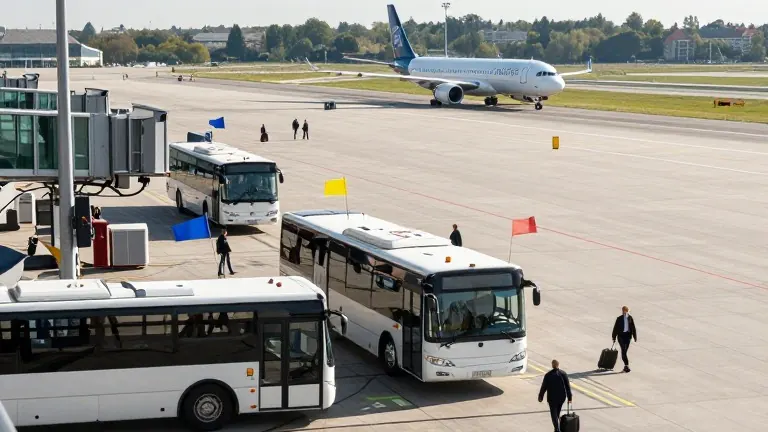
According to Russia's Ministry of Defense, those heading to Ukraine first traveled to the Russian city of Anapa. From there, they boarded planes to Homel, Belarus. Dmytro Lubinets, Ukraine's commissioner for human rights, accompanied the group. In Homel, rescue workers, medical teams, and Red Cross volunteers met the passengers, as reported by Belarusian state media.
Ukrainian lawmaker Davyd Arakhamia confirmed that four planes carrying evacuees had landed in Belarus. He stated that the passengers would reach Ukrainian territory within hours. Meanwhile, Yana Lantratova, Russia's ombudswoman, said buses also transported residents who chose to move to Russian-held areas.
The White House credited U.S. First Lady Melania Trump with helping broker the truce. She posted on social media on Friday that the humanitarian convoy could safely evacuate more than 750 people. Neither country has released a final count of how many individuals left the city.
This joint effort provided a brief break in the conflict while both sides coordinated the transfer. Pope Leo XIV, the first American pope, also urged leaders to allow aid deliveries and civilian evacuations. In a separate development, President Volodymyr Zelenskyy welcomed the U.S. approval of 500 PAC-3 Patriot interceptors for Ukraine. He noted that Russian forces had struck critical power grid parts more than 30 times in the past two weeks of October. The State Department said the $2.1 billion sale would be funded by donations from Canada, Germany, and Norway, with no American funds involved.
Source: WKMG-TV · original report published