UCF Anthropologist Maps Flood Disparities in Miami-Dade
The university’s first graduate in integrative anthropological sciences found that high-income areas have better flood protection than low-income neighborhoods.
By Victoria Hayes ·
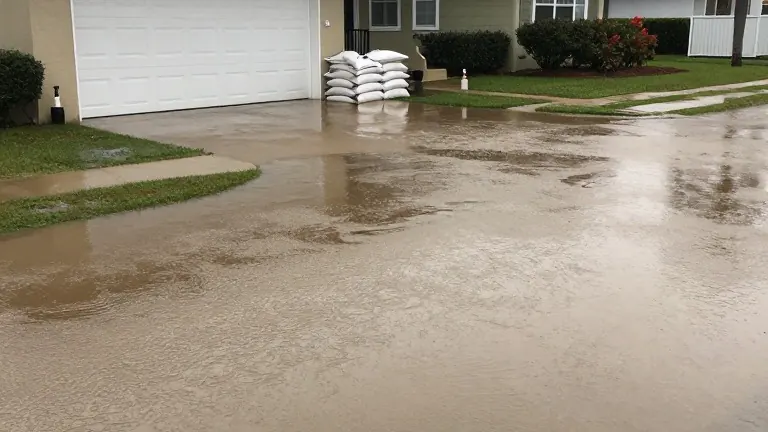
Tovar-Ospina found that high-income, tourist-focused areas in South Florida received substantial flood-protection infrastructure, while historically lower-income communities continued to experience recurrent flooding that persisted for decades in some locations.
The researcher, a Colombian native, became the first graduate of the University of Central Florida’s integrative anthropological sciences doctoral program in Summer 2026. He holds a concentration in environmental anthropology and studied how flooding and sea-level rise affect vulnerable communities in Miami-Dade County.
Tovar-Ospina’s dissertation, titled Architectures of Flooding: History, Power, and the Production of Flood Risk in Miami-Dade County, treats flooding as a condition shaped by history, infrastructure, environmental transformation and funding. He combined ethnography, interviews, participant observation, participatory mapping, historical research and geographic information systems to connect residents’ experiences with broader trends that shape flood vulnerability.
His work revealed a disconnect between modeled flood exposure and lived experiences. Some communities identified as highly exposed by conventional flood-risk models reported relatively limited experiences with recurrent flooding due to sea walls, coastal barriers and improved drainage systems. Farther inland, lower-income communities experienced recurrent flooding, including residents still recovering from hurricanes in previous years.
Through participatory mapping, residents identified places where they repeatedly experienced flooding. These maps revealed recurrent flooding, drainage problems, mobility disruptions, and household impacts that conventional assessments did not always capture. Tovar-Ospina noted that residents were often offered short-term responses like sandbags and water bottles, while they called for longer-term adaptation strategies.
Tovar-Ospina received the Judges’ Choice Award at UCF’s 2026 Student Scholar Symposium and the Best Paper Presentation Award at the International Conference on Environmental Anthropology and Sustainability in Paris. His peer-reviewed article, Tangible and Intangible Impacts of Flooding in Miami-Dade County: A Human-Centered Analysis, was published in Human Ecology in 2026.
He also received the 2026 Laura Bassi Scholarship for his book manuscript, Architectures of Flooding: Unequal Ground in a Drowning County. Additionally, he was selected as one of nine international participants for the 2025 Climate Politics and Autocratization Conference at the University of Bergen in Norway.
Source: UCF Today · original report published