52 Million Votes Cast As Trump Targets Iowa And Kansas
The president holds rallies in Dubuque and Salina while Democrats face internal conflict in Michigan ahead of Tuesday's election.
By Eric Collins ·
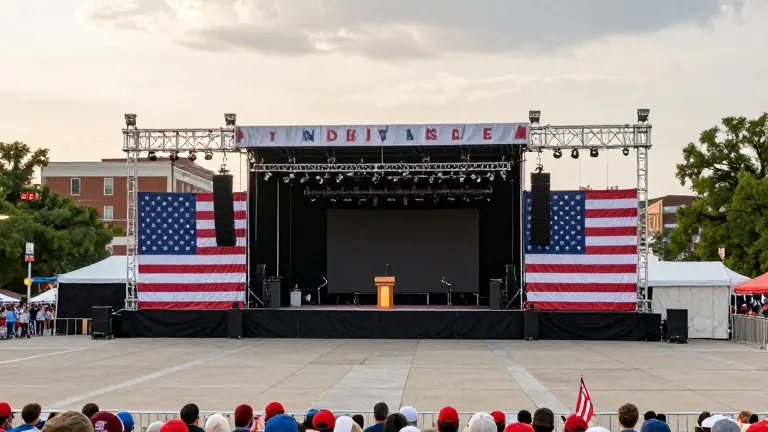
President Donald Trump is concluding the final weekend of midterm campaigning with stops in Iowa and Kansas.
More than 52 million votes have already been cast as the general election approaches on Tuesday. The Republican strategy focuses on holding seats in states the party has previously dominated. In 2024, Trump campaigned to flip states that supported President Joe Biden in 2020. This year, his efforts concentrate on solidifying support in areas where voters are questioning the economic impact of new tariffs and the conflict in Iran.
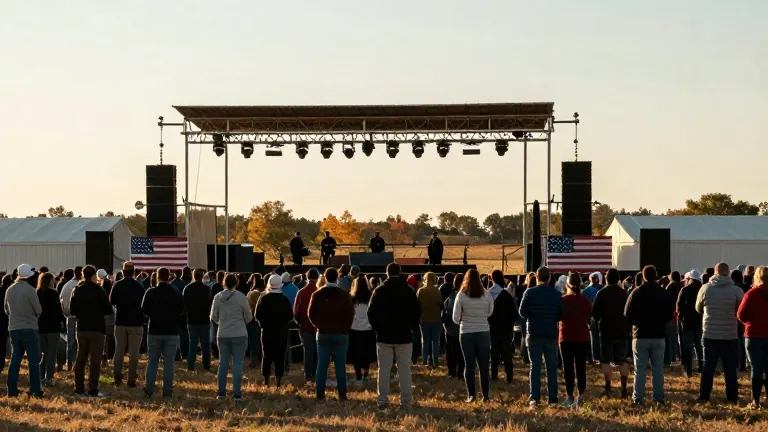
Trump arrived in Dubuque, Iowa, on Sunday afternoon to support Ashley Hinson, the Republican candidate for the U.S. Senate. The 2nd Congressional District in Iowa has become competitive, adding pressure on the GOP to maintain its fragile majority in the U.S. House. Trump stated his purpose for the visit: “We’re really here to support Ashley. We have to get the Senate.” His itinerary includes a final rally in Salina, Kansas, on Monday. That state sees a competitive race between Republican incumbent and Democrat Adam Hamilton, who is seeking to become the first Kansas Democrat to win a Senate seat in 94 years.
While Republicans prepare for Tuesday, Democrats in Michigan face a challenge to their unified front. Haley Stevens, a congresswoman and former Senate primary opponent of the current Democratic nominee, endorsed Republican candidate Mike Rogers. Stevens announced the switch after saying the Democratic nominee told her she was no longer welcome in his campaign. “Our Democratic nominee for Senate said I was no longer welcome in his campaign and that I should stay away,” Stevens said in a video. “And he’s right. And that’s why I am endorsing Mike Rogers for the United States Senate today.”
Other Democratic leaders moved to reaffirm their support for Abdul El-Sayed, the party’s nominee in Michigan. Senate Majority Leader Chuck Schumer of New York said the party remained united. Senate Democratic Leader Kirsten Gillibrand of New York stated the party would stand firmly behind El-Sayed and reject efforts to divide the coalition. Independent Senator Bernie Sanders of Vermont, a key supporter of El-Sayed, dismissed concerns about a split, noting that Stevens lost a close primary and that voters in the state were standing with the nominee.
Michigan is central to the Democratic goal of retaking control of the U.S. Senate. If they lose that seat on Tuesday, the party will need to win races in traditionally Republican states such as Texas, Ohio, and Iowa to secure the chamber. In Iowa, Democratic gubernatorial nominee Rob Sand held multiple events across the state on Sunday. In Dubuque, local residents expressed loyalty to Trump despite economic concerns. Jon Lutz, a 60-year-old civil engineer, said he wants Republicans to keep control of both chambers to advance the president’s agenda. Wendy Kuenzler, a 44-year-old resident of Burlington, said she does not blame rising prices on Trump and believes he is on the path to correcting them.
The campaign's closing stretch serves as a test of Trump's influence within the Republican Party. Outgoing Representative Don Bacon of Nebraska raised concerns that tariffs could weigh on the party’s performance. “Tariffs are not popular here in the Midwest,” Bacon told CNN. He predicted a debate within the party if Republicans suffer major losses. Senator Tim Scott of South Carolina, chair of the National Republican Senatorial Committee, remained optimistic. He told NBC that the midterm election is a direct vote on Trump’s agenda, stating, “His agenda, without any question, is on the ballot.”
Source: HuffPost