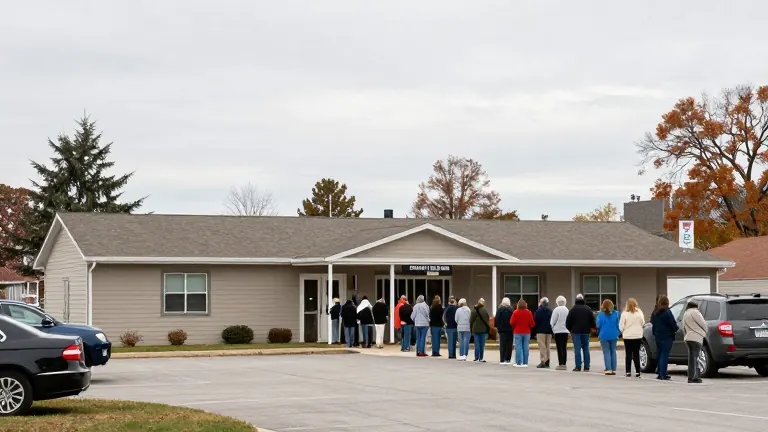
Election officials in Central Florida face heightened scrutiny amid national pressure
Palm Beach County Supervisor of Elections Wendy Link reports receiving threatening correspondence, while experts warn that local errors can quickly become national stories in competitive races.
By Eric Collins ·
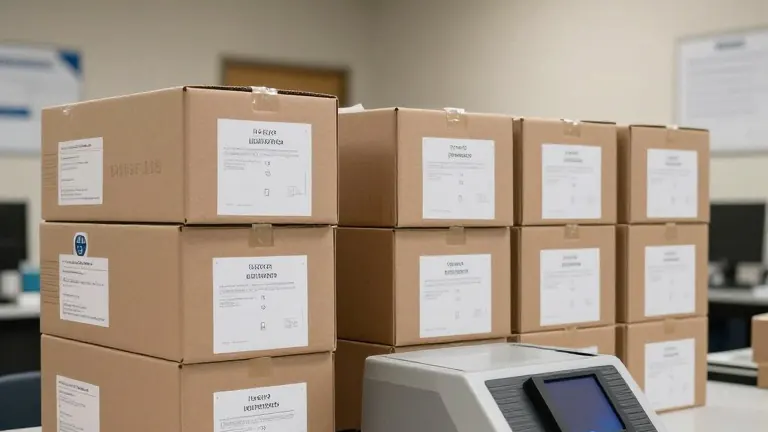
Voting officials across Central Florida are preparing for a midterm cycle that may place their offices under intense national examination. In 2020, the focus was primarily on swing states like Michigan and Georgia. This year, because races to decide control of the U.S. House and Senate are spread across many states, local clerks in regions that have not recently been battlegrounds are facing new levels of attention. For residents of counties like Palm Beach, this means election staff are working with an added awareness that small administrative issues could attract nationwide headlines.
Tina Barton, who served as the city clerk for Rochester Hills, Michigan, in 2020, explains the difference in how mistakes are perceived. In non-battleground areas, human errors are often explained away by local press coverage without becoming major news stories. In competitive states, however, the same error can evolve into a major conspiracy theory. Barton’s office in Michigan sent an unofficial absentee vote file twice because the first transmission did not appear to go through. The error did not change the final vote tally, and it was corrected the next day, but the incident had lasting personal consequences for the staff involved.
The chairwoman of the Republican National Committee accused Barton’s office of improperly awarding votes to Democrats. Barton received numerous death threats, including a voicemail stating she deserved a "throat to the knife" because she had "frauded out America of a real election." More than five years later, officials in established swing states like Arizona and Georgia are accustomed to this level of scrutiny. However, officials in states such as Iowa, Alaska, New York, and Kansas may find themselves in the national spotlight for the first time this year.
Chris McGinn, executive director of the Texas Association of County Election Officials, noted that Texas has been a reliable Republican state for nearly 50 years. This history has generally meant fewer competitive elections and less pressure on voting officials during federal cycles. McGinn’s organization has worked to prepare county clerks for the possibility that this dynamic could change in 2026. The U.S. Senate race in Texas could determine the balance of power in that chamber, and the Republican nominee for that seat had sought to help President Trump overturn his 2020 election loss. McGinn told members that they do not want to be "Florida in 2000," a reference to the chaotic recount in that state.
Wendy Link, the supervisor of elections for Palm Beach County, Florida, oversees a jurisdiction that includes part of a toss-up congressional district this year. She reports that her office still receives what she calls "love letters," which are emails intended to intimidate. One example she shared described plans to send an army to arrest her and have her spend time in Guantanamo Bay. Link says she is not as worried about her own safety as she has been at other points in her career, though she does not enjoy reading the messages. She is not currently requesting a security detail.
Barton, now vice president of the Committee for Safe and Secure Elections, helps local officials plan for worst-case scenarios. She warns that controversy can find officials in both red and blue states. It often takes only a minor technical failure, such as ballot equipment going down or a website crashing, to trigger false narratives. Researchers studying election misinformation note that most false stories emerge from real events that are then seized upon by influencers or politicians to imply intentional wrongdoing or wider scale than actually exists.
The Committee for Safe and Secure Elections doubled the number of trainings it led in 2026 compared to 2024. This increase reflects new concerns regarding actions by the Trump administration in elections and a broader understanding of what it means to operate in a battleground state. When Barton speaks with officials in competitive districts, her message is direct. She tells them they better be on their game.
Election officials in Central Florida continue to manage routine operations while staying alert to the potential for heightened attention. The pressure is not limited to a single party or region. It is a function of the national media environment and the competitive nature of this year’s races. Local staff are implementing additional checks and training to ensure that minor errors do not escalate into major public disputes.
Source: Central Florida Public Media · original report published
More Politics · Orlando news · Report a business · Got a Story?