National Symphony Orchestra plays reduced season from temporary venues
Musicians are performing in six different locations across the region while the Kennedy Center remains closed.
By Eric Collins ·
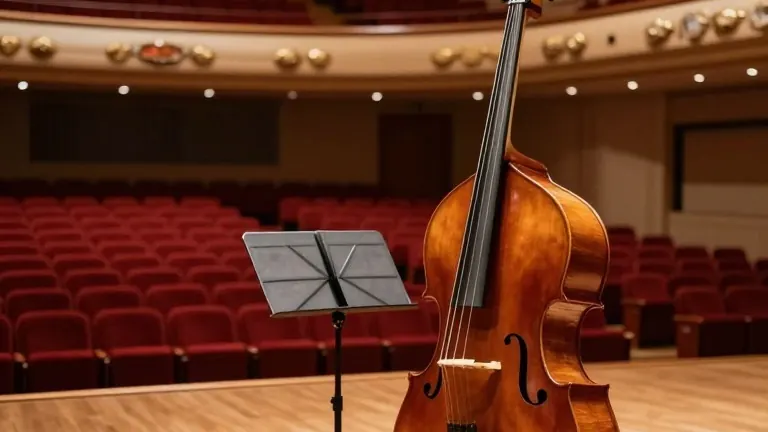
The National Symphony Orchestra opened its 2026-2027 season on Sept. 26 at the Music Center at Strathmore in Bethesda, Md., rather than in its longtime home at the John F. Kennedy Center for the Performing Arts in Washington, D.C. The orchestra will perform in six different venues across the greater Washington region this season as the Kennedy Center remains closed.
The Kennedy Center shut its doors on Sept. 15. The closure followed months of declining ticket sales, audience boycotts, and a federal court battle regarding the addition of President Trump's name to the building's facade. Trump assumed control of the center in early 2025 after replacing the board of trustees and removing president Deborah Rutter.
Music director Gianandrea Noseda, an Italian conductor who has led the 95-year-old orchestra for nine years, described the news of the closure as a cold shower. The orchestra had to wait until mid-August for budget approval from the Kennedy Center Board of Trustees before announcing its new season. That announcement came just six weeks before the opening concert, which was scheduled only 11 days after the center locked its doors.
The opening night program featured new music by Carlos Simon alongside works by Tchaikovsky and Respighi. Anne Midgette, a former classical music critic for The Washington Post, called the evening bittersweet, noting the difficulty of a major city orchestra performing outside its dedicated hall. Midgette expressed concern that the orchestra might not have a season at all due to its close ties to the Kennedy Center.
Financial pressures are mounting. The Washington Post reported in August that ticket revenue is expected to drop by about half, while donations are projected to fall by a quarter. These cuts are partly attributed to major reductions in the Kennedy Center's development department. The orchestra also lost most of its former staff, including executive director Jean Davidson, who resigned in March citing the turmoil at the center.
Rick Barber, the associate principal double bassist who joined the orchestra in 1995, said the musicians were stunned by the closure. He described the months following the news as a period of anxiety and uncertainty. Barber, however, remains focused on the music, stating that he does not think about national political divisions while playing.
Noseda extended his contract with the orchestra through 2031 after Rutter was fired. He said he chose to stay because leaving would have been too easy for a leader. Noseda aims to reach new audiences in different locations. He described the current situation as a way to see the glass half full.
The orchestra is playing about half as many concerts as usual this season. Midgette noted that the season will serve as a test of how many audiences are invested in the ensemble. She pointed to financial struggles and closures at other symphonies, including the Phoenix Symphony, as part of a national trend. Affordability remains a primary challenge, with the cost of tickets and travel competing with basic expenses like gas and groceries.
The orchestra played to a packed house at the opening concert in Bethesda. Noseda believes the music can still bring people together despite the challenging times. It is currently unclear how long the orchestra will remain without its home venue at the Kennedy Center.
Source: Central Florida Public Media · original report published
More Culture · Orlando news · Report a business · Got a Story?