Flock Safety Cameras Stream Live Data to Public Internet, Researcher Reports
Security expert Benn Jordan discovered that dozens of police-linked cameras are broadcasting vehicle and pedestrian data without access controls, contradicting the company's privacy claims.
By Peter Graham ·
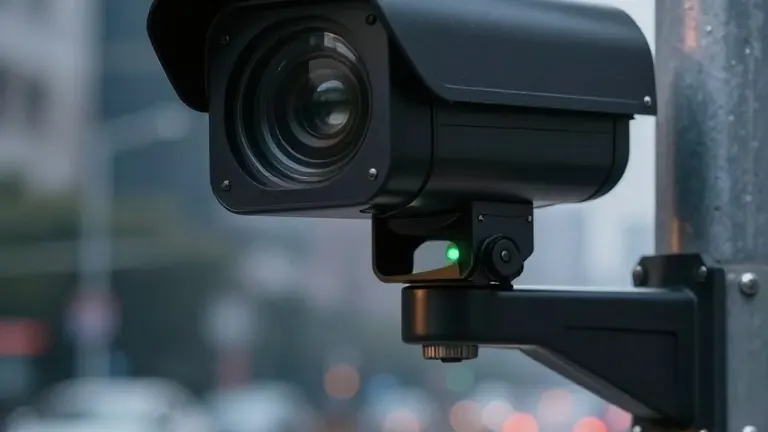
Security researcher Benn Jordan has found that dozens of Flock Safety cameras are broadcasting live data streams to the public internet without password protection. The discovery contradicts the company's public stance that its hardware tracks vehicles, not people. Jordan’s findings suggest the system may be capturing more detailed movement data than law enforcement agencies typically disclose to the public.
Flock Safety states its network focuses on vehicle identification. However, training videos provided by the company show police officers using the software to follow suspects from one location to another. The footage demonstrates the system’s ability to lock onto specific targets as they move through different zones.
Jordan noted that certain camera models are built to track pedestrians. He described the technology’s behavior in his analysis of the exposed feeds. “And they quite literally use AI to zoom in and follow you around whether you’re a person of interest or not,” Jordan said. The researcher identified the open streams by scanning the public web for unsecured endpoints associated with the camera network.
The company has deployed its technology across many police departments in the United States. The system uses artificial intelligence to process video feeds in real time. When the streams are open, anyone with the correct web address can view the live footage. This access allows observers to see the area covered by the camera without needing an official login or clearance.
Jordan’s work focuses on mapping these security systems to understand their reach. He aims to catalog every police camera using this technology in the country. His research highlights the gap between the data the cameras collect and the privacy assurances given to residents in the covered areas.
The open streams provide a direct window into the areas where the cameras are installed. Jordan’s findings rely on the data available through these unsecured connections. He did not report whether Flock Safety had fixed the specific vulnerabilities he found before sharing his results.
The researcher’s discovery adds to ongoing discussions about surveillance technology in public spaces. Flock Safety continues to maintain that its primary function is vehicle tracking. The company’s training materials, however, show the system being used to follow individuals on foot across multiple locations.
Source: WWSB