UCF Astronomer Wins NASA Grant for Telescope Concept
Anish Roshi Damodaran received a $175,000 award to develop a virtual telescope using connected spacecraft.
By Victoria Hayes ·
Anish Roshi Damodaran, a professor at the University of Central Florida, has been selected for Phase I of NASA’s 2026 Innovative Advanced Concepts program. The nine-month award provides $175,000 to fund early research into a space-based virtual telescope concept known as PHOENIX. Damodaran is one of 18 U.S. researchers chosen for this initial stage of the program.
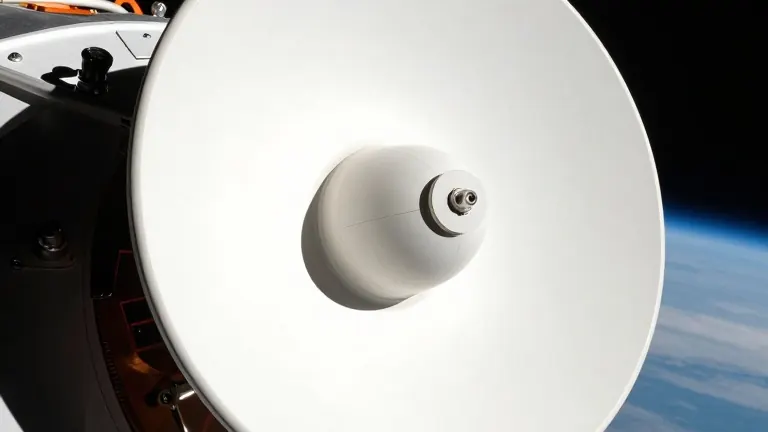
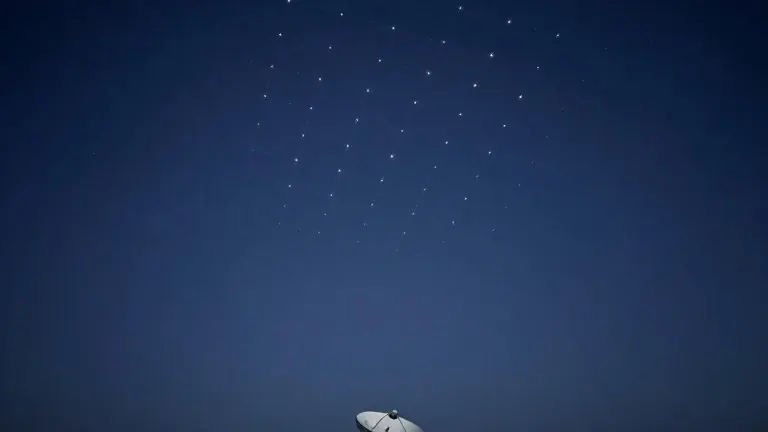
PHOENIX, which stands for Photonics-Enabled Heterodyne Submillimeter/Far-Infrared Interferometer, proposes connecting up to 25 separate spacecraft. These satellites would use advanced photonic technologies to function together as a single, high-resolution telescope. The system targets submillimeter and far-infrared wavelengths, allowing it to observe cold gas and dust that are invisible to the human eye. This capability could help scientists study planet formation, star birth, and the evolution of distant galaxies.
Damodaran is collaborating with a team that includes colleagues from UCF’s College of Optics and Photonics and the Florida Space Institute. The project also involves researchers from NASA’s Jet Propulsion Laboratory. Key partners include CREOL Pegasus Professor Peter Delfyett, CREOL professors Guifang Li and Stephen Eikenberry, Florida Space Institute researcher Julie Brisset, College of Sciences Professor Yan Fernandez, and JPL researchers Jacob Kooi and Jonathan Kawamura. The team aims to address the technical challenges of synchronizing multiple spacecraft and processing large volumes of data.
The concept addresses limitations in current observatories. Existing facilities can detect cold gas associated with cosmic processes but often cannot resolve the specific structures where these events occur. A single telescope large enough to provide that resolution would face major launch constraints. By splitting the observing power across smaller satellites, PHOENIX seeks to achieve ultra-high-resolution imaging. Damodaran noted that the project could allow astronomers to examine how turbulence, gravity, and gas dynamics interact in star-forming regions.
Damodaran previously led radio astronomy operations at the Arecibo Observatory. UCF began co-managing that facility in 2018 under an agreement with the U.S. National Science Foundation. Following the telescope’s structural collapse in 2020, Damodaran continued his research activities at UCF. He described the NIAC process as rigorous, comparing it to undertaking a second Ph.D. thesis. The work involves questioning assumptions and identifying critical technology gaps to build a compelling scientific case.
The current Phase I study is an early step toward determining if the vision is technically achievable. The team will develop a detailed mission architecture and assess technology readiness. If successful, the project could move to Phase II, which offers up to $750,000 for two years of further development. Phase III provides up to $2 million for another two years of exploration, with the goal of transitioning high-impact concepts to NASA, other government agencies, or commercial partners. NASA plans to make six to eight Phase II awards and one Phase III award each year.
Damodaran attended the NIAC orientation and symposium following his selection. The event brought together other fellows to discuss the range of early-stage concepts being pursued. He stated that the opportunity to explore the idea with NASA support is both professionally and personally inspiring. The research focuses on direct observation of planet formation in protoplanetary disks, aiming to resolve structures on scales comparable to the inner solar system.
Source: UCF Today · original report published